
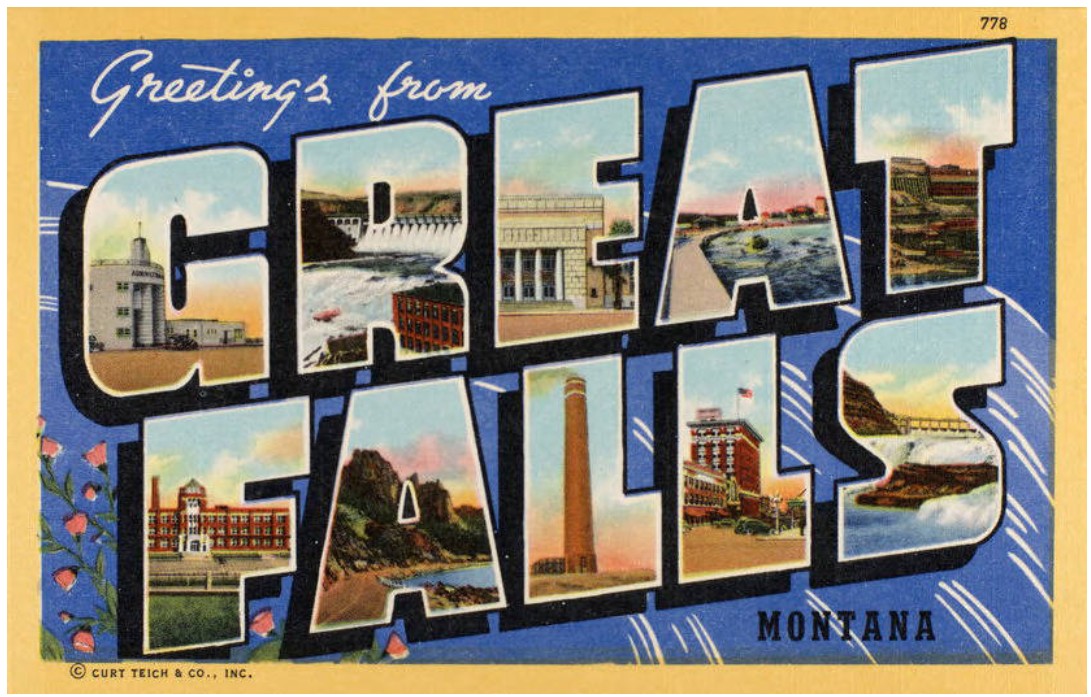
Great Falls, Montana: 5 Essential Facts About the City Lewis and Clark Almost Missed
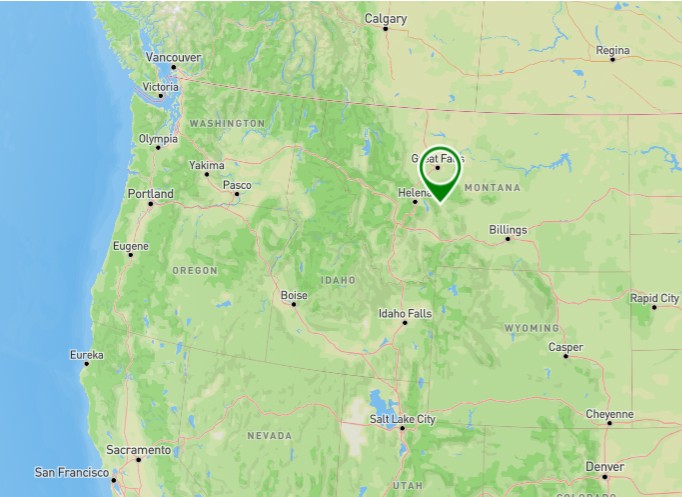
Great Falls, Montana, sits on the Missouri River in the heart of Big Sky Country. Most people drive through it on the way to Glacier National Park or Yellowstone. That is a mistake. The Missouri River drops over 600 feet through a series of five waterfalls…and those falls changed the course of American history.
In June 1805, Lewis and Clark arrived at this spot and faced one of the greatest physical challenges of their entire 2-year journey. They nearly gave up. Great Falls, Montana, rewards anyone willing to stop and have a look.
Highlights
- Lewis and Clark could hear the Great Falls from seven miles away — before they could see them.
- What they thought was a half-mile detour turned into a brutal 18-mile ordeal lasting nearly a month.
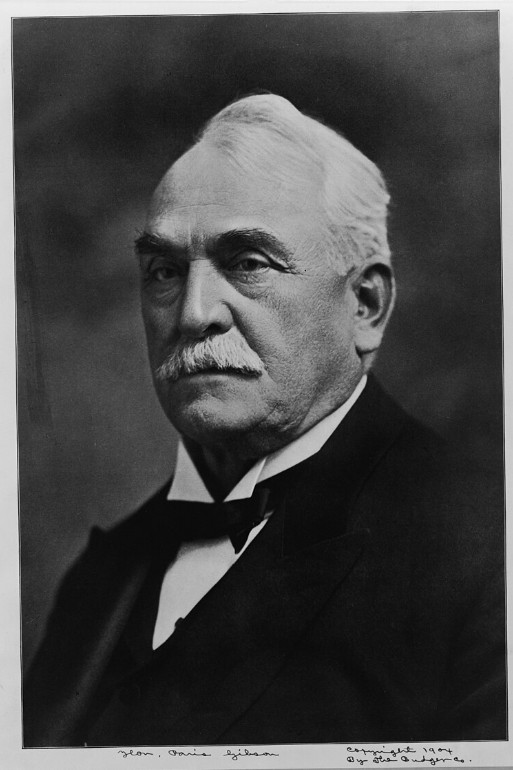
- One determined man named Paris Gibson turned this wild river bend into Montana’s “Electric City” in 1884.
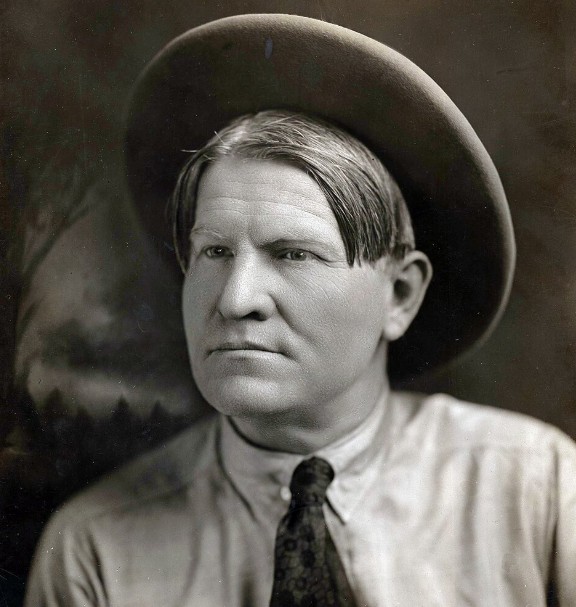
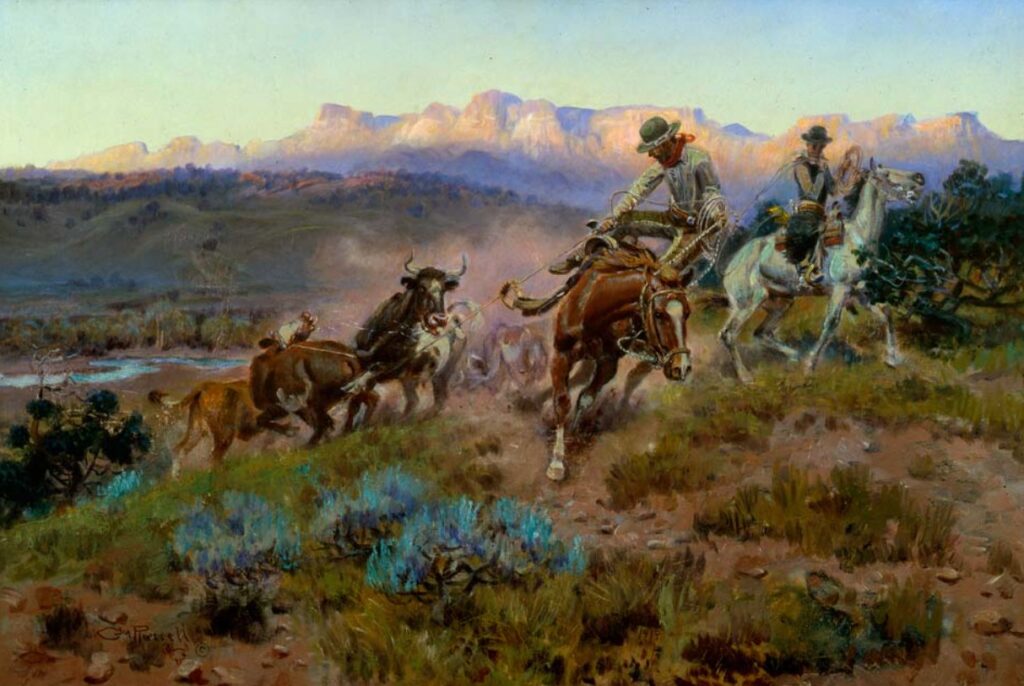
- The world-famous cowboy artist Charles M. Russell lived and painted here for decades.
- The falls shaped the entire economy of central Montana — from copper smelting to hydroelectric power.
Lewis and Clark Hear Something Strange
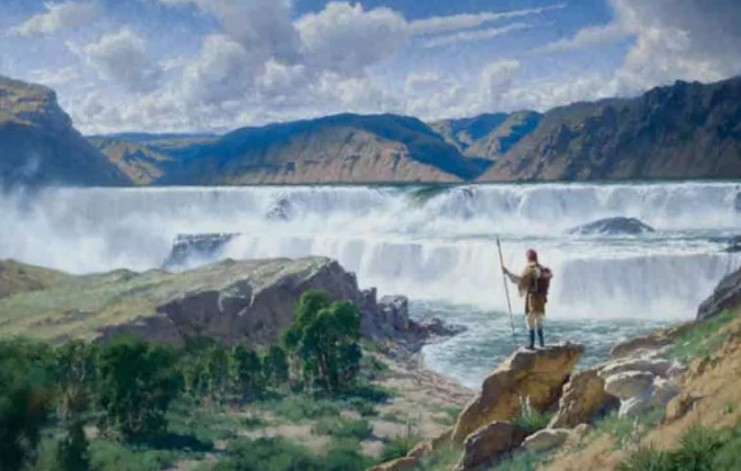
When Lewis and Clark explored this region in 1805, they could hear the falls from seven miles away. That sound told them something important: They were on the right river. Native peoples had warned the explorers about a set of impassable waterfalls on the upper Missouri. Finding them meant the Corps of Discovery was on the correct route to reach the Pacific Ocean.
Meriwether Lewis went ahead on foot to investigate. He was amazed to find not just one great waterfall, but a series of five falls of different sizes. He declared it was the grandest sight he had ever beheld. Lewis stood and stared. He was, by his own account, lost for words…which was unusual for a man who filled journals full of detailed observations.
An 18-Mile Nightmare
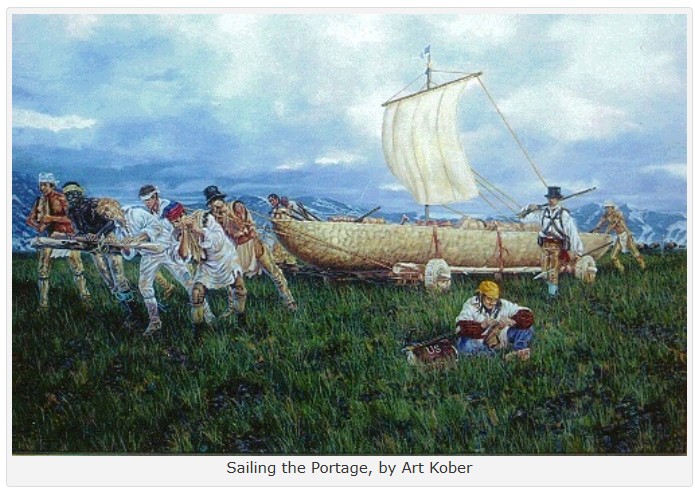
Lewis’ amazement did not last long. Native informants had told Lewis and Clark that the portage around the falls was not more than a half mile. The actual portage ened up being a very difficult eighteen-mile traverse that delayed their progress by more than a month.
The men built crude wooden wagons from cottonwood trees and pushed and pulled their canoes overland in summer heat. Prickly pear cactus poked their feet through their worn moccasins. They endured heavy rains, flash floods, and huge hail falling from the sky. Sacagawea, their guide, became dangerously sick during the portage. Lewis found a sulphur spring near Belt Creek and gave her the mineral water. He hoped it might help her. She survived.
Near Great Falls, Lewis also identified the Westslope Cutthroat Trout…now Montana’s state fish. He also collected the first samples of the Western Meadowlark, later named Montana’s state bird. Even during hard times, Lewis and Clark’s men were making history.
For more about Sacagawea and her role in helping guide Lewis and Clark, see this related TCO article.
One Man’s Dream: The Electric City
Nearly 60 years later, the falls that stopped Lewis and Clark for a month looked like a positive opportunity to one man. Paris Gibson visited the Great Falls of the Missouri River in 1880. He quickly recognised their potential for producing hydroelectric power. Gibson had failed in business in Minnesota. Montana became his second chance.
Gibson convinced a friend, railroad magnate James J. Hill, to invest in a townsite at the falls. With Hill’s backing, Gibson founded the city of Great Falls in 1884. An engineer, Gibson laid out the streets in a precise, arrow-straight pattern. Believing that beauty was important for a city, he made sure that elm, ash, and fir trees were planted on every street. He also set aside over 880 acres for city parks.
Under Gibson’s direction, the Great Falls Light & Power Company built a dam on the Missouri at Black Eagle in 1890. The hydroelectric power it generated gave power to smelters for the Butte Copper Company, grain mills, and electric street lights. Great Falls became known throughout Montana as “The Electric City.”
The Cowboy Artist Who Never Left
Around the same time Gibson was building his city, a young man from St. Louis arrived in Montana looking for adventure. His name was Charles Marion Russell. He worked as a cowboy in the Judith Basin and spent his winters painting what he saw…bison hunts, cattle drives, grizzly bears, Native Americans, and wide open skies.
Russell was born in March 1864 in St. Louis, Missouri, and died in Great Falls, Montana, at the age of 62 in October 1926. He completed more than 3,000 paintings! He tried to paint what he saw as the essence of the American West. The C.M. Russell Museum in Great Falls preserves his original studio and home. The museum complex covers an entire city block and features the original Russell house and studio. It is considered to be one of the finest collections of Western art anywhere in the United States.
Where the River Still Tells the Story
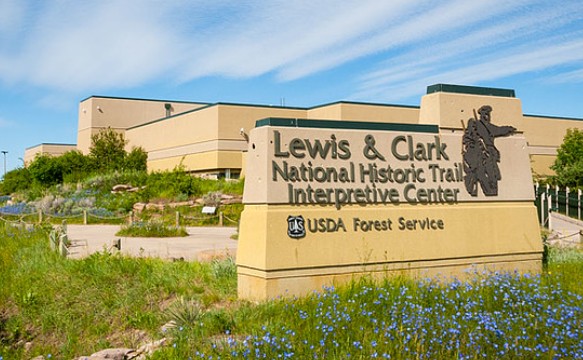
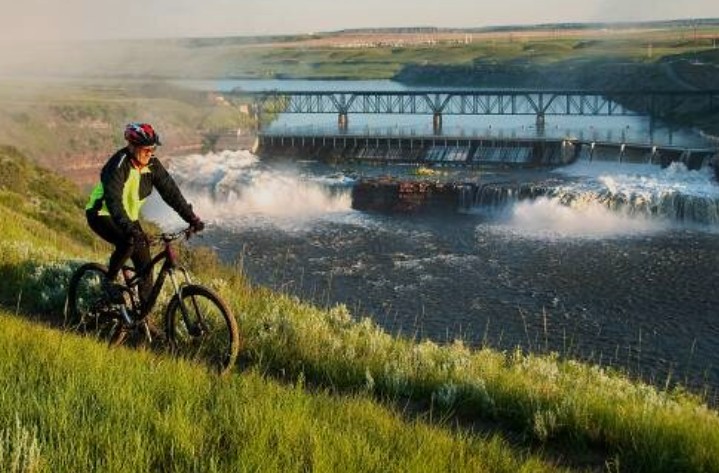
Today, Great Falls sits at a remarkable crossroads of nature and history. The city is home to the Lewis and Clark National Historic Trail Interpretive Center, which walks visitors through the 8,000-mile expedition with videos, guided tours, and outdoor opportunities along the Missouri River. The 30-mile River’s Edge Trail follows the banks of the river past the overlooks for Rainbow Falls and Black Eagle Falls. This is the same water that stopped one of America’s greatest expeditions in its tracks.
The falls themselves are quieter now. Today, five dams control flow along this section of the Missouri. But if you stand at the river’s edge in the early morning, then it is not hard to imagine Meriwether Lewis doing exactly the same thing in June 1805. You can still hear the roar of the falls and feel the mist from the river.
Great Falls, Montana, shaped the American West in ways most people never learn. It was the barrier that tested Lewis and Clark’s Corps of Discovery. It was the power source that built an industrial city on the Montana plains. And it was home to the artist who captured the West before it disappeared. This unique combination does not exist anywhere else.
Gallery
Discover more from TheCuriousOnlooker
Subscribe to get the latest posts sent to your email.
Absolutely fascinating. I have a brother and sister-in-law who had a ranch and lived there for several years. If I had known all of the information you have shared, I would’ve visited numerous places and did the activities that you talked about.
Thanks, Wayne. We were close to Great Falls once when we visited Glacier National Park. I regret not taking more time to explore the Great Falls area.
Absolutely fascinating. I have a brother and sister-in-law who had a ranch and lived there for several years. If I had known all of the information you have shared, I would’ve visited numerous places and did the activities that you talked about.