The Forgotten Uranium Town That Helped Build the Atomic Bomb
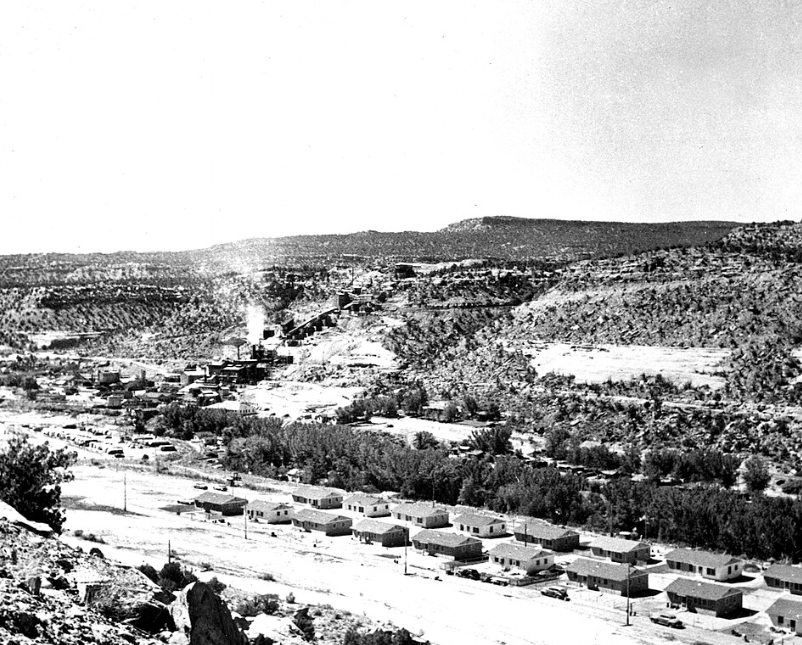
Photo: Wikimedia Commons
In southwest Colorado, a town once stood that helped end World War II. It was called Uravan. At its peak, more than 800 people lived there. It had schools, a swimming pool, a theater, and tree-lined streets. Today, nothing remains above ground. The whole town was demolished and buried. It was erased. What happened here is one of the strangest and most dramatic stories in the history of the American West.
A Strange Yellow Mineral Changes Everything
The story begins long before Uravan had a name. In the late 1800s, prospectors came to the canyon country of southwest Colorado. They were looking for gold and silver. Instead, they found something odd…a bright yellow mineral streaked through the canyon cliffs. It was called carnotite.
Carnotite turned out to be rich in radium, vanadium, and uranium. In the early 1900s, radium was very valuable. It took nearly 300 tons of ore to produce a single gram. In 1914, the Standard Chemical Company of Pittsburgh set up a processing camp here. They called it the “Joe Junior” mine. By 1923, the radium boom was coming to an end. Rich deposits from the Belgian Congo flooded the market. American producers were not able to compete. But a new company saw different possibilities in the canyon.
Map: Google Maps
How Uravan Got Its Name and Became a Model Company Town
In 1928, the U.S. Vanadium Corporation (USV) took over the failing operation. Vanadium was in high demand — it hardened steel and was essential to growing industries. USV expanded steadily. By 1936, USV had built something new entirely. They laid out streets, constructed neat rows of houses, added a company store, a post office, a community hall, a pharmacy, and a swimming pool. Workers and their families moved in. Someone held a contest to name the new town. The winning entry combined the two minerals at the heart of it all — uranium and vanadium. This created the name Uravan. At its height, Uravan felt complete and self-contained. Residents rarely needed to leave. Children grew up together. Families built lives in the quiet town in a remote corner of Colorado.
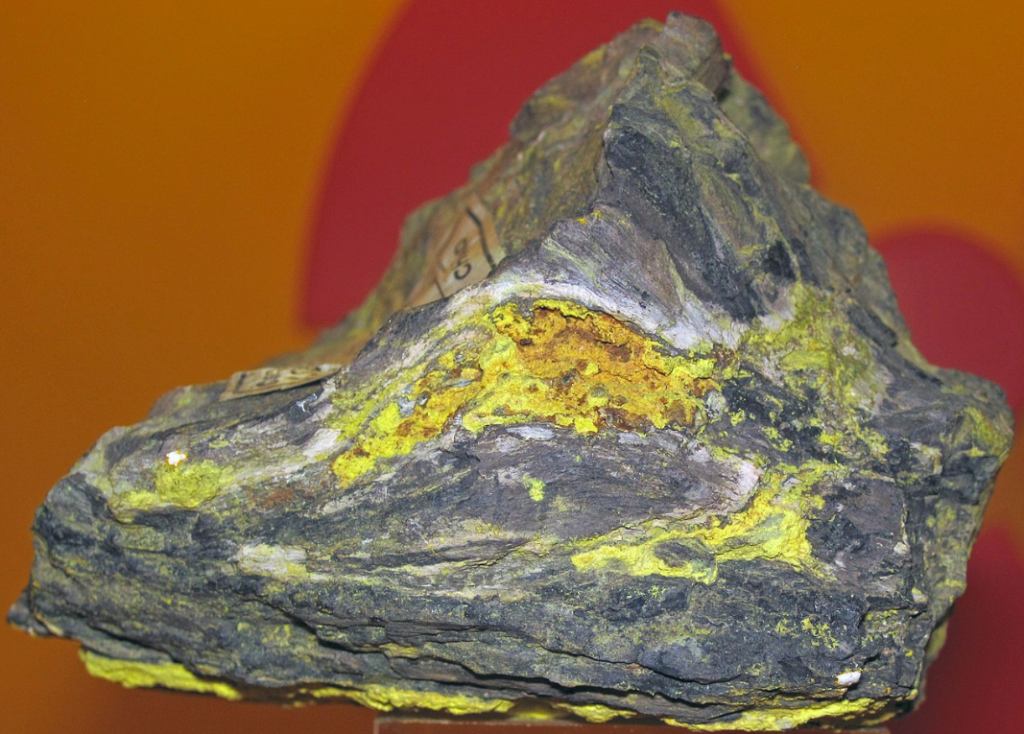
Photo: Wikimedia Commons
Uravan’s Secret Role in the Manhattan Project
Then came World War II. This changed Uravan forever. Uranium, long treated as little more than a waste byproduct of vanadium processing, suddenly became the most strategically important mineral on Earth. The U.S. government needed it for an unprecedented weapons program: the Manhattan Project.
Uravan’s mill shifted to wartime production under strict secrecy. Starting in May 1943, USV operated under top-secret government contracts. Workers processed uranium ore into a concentrated paste known as “yellowcake.” The mill produced around three tons of uranium sludge every single day. In total, Uravan provided approximately 14% of all the uranium acquired for America’s first nuclear weapons.
The government was so secretive that it publicly acknowledged purchasing only vanadium — not uranium. The uranium miners were never paid for what they actually produced. Decades later, many workers or their families won lawsuits to recover lost wages from the U.S. government.
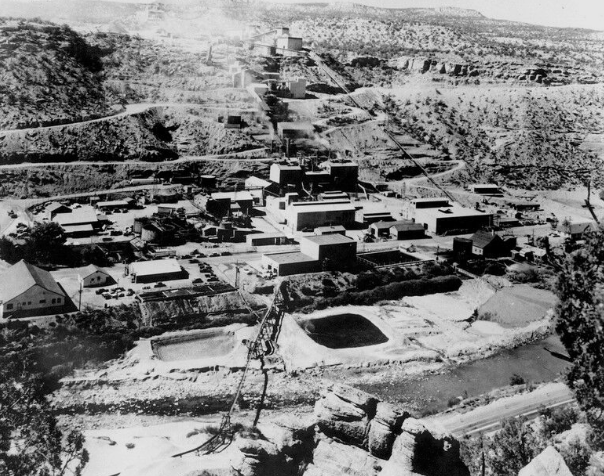
Photo: Wikimedia Commons
The Cold War Boom — and the Beginning of the End
After the war, operations at Uravan kept going. The Cold War created enormous new demand for uranium. The U.S. Atomic Energy Commission set high prices to encourage domestic production, and a uranium boom swept across the Four Corners region in the early 1950s. Uravan was at the center of it. The town thrived through the 1960s and into the 1970s. Then things began to change. New nuclear power plants were being built, but not fast enough. Cheap uranium imports from Canada undercut domestic prices. Public fears about nuclear energy grew. Production declined.
What no one had talked about openly for decades now became impossible to ignore: the ground, the water, and the air in Uravan were contaminated. Radioactive tailings — the waste left over from ore processing — had been used as fill material under buildings, under roads, and throughout the town. Radon gas seeped from the ground. Heavy metals had leached into the San Miguel River. In 1983, the State of Colorado filed a lawsuit against the companies operating the site. The Environmental Protection Agency (EPA) added Uravan to its Superfund list in 1986. The official decision was final: Uravan was uninhabitable. Around 800 residents were ordered to leave.
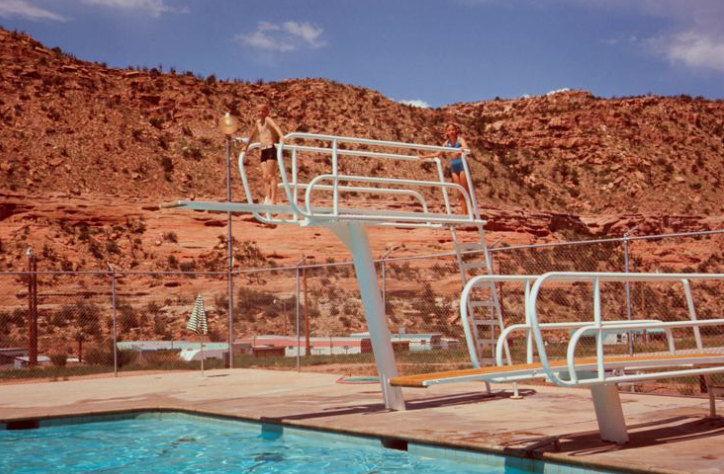
Photo: Montrose Daily Press
Erased from the Map — But Not from Memory
What followed was one of the most unusual demolition projects in American history. Over the course of about 20 years, crews tore down every building in Uravan. Every house, school, store, and sidewalk was removed. They sealed nearly 10 million cubic yards of radioactive tailings in covered containment cells. The cleanup cost an estimated $120 million. By 2007, the entire townsite had been leveled and replanted.
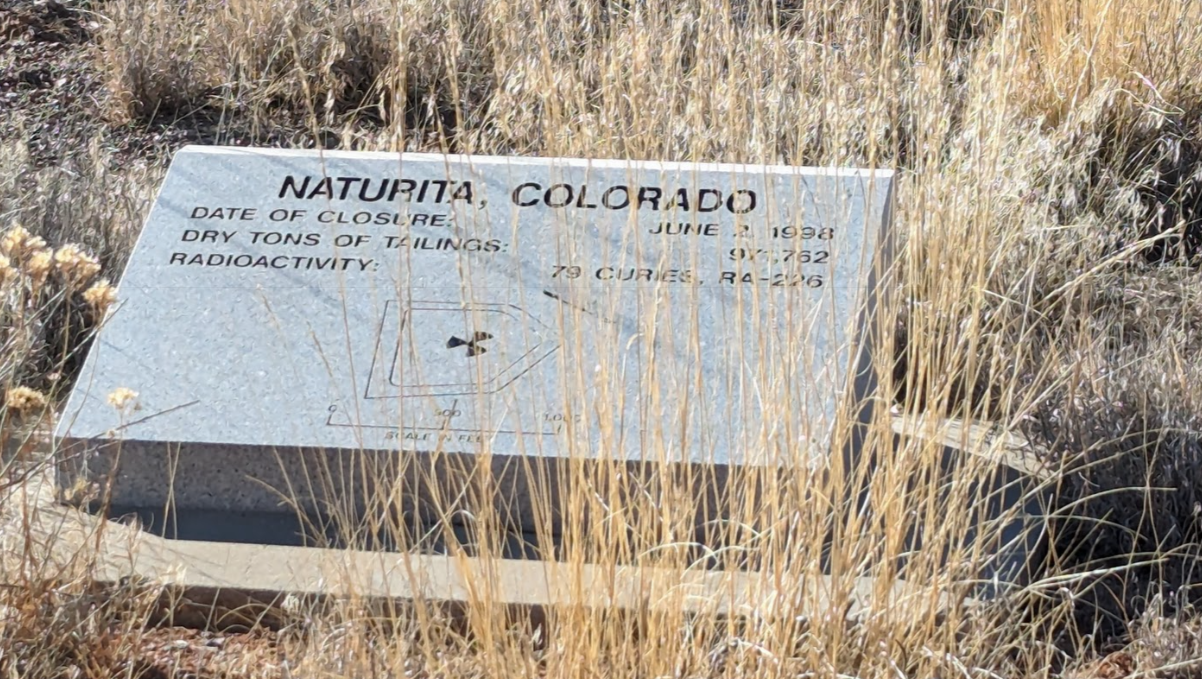
Today, a turnoff along State Highway 141 — the scenic Unaweep-Tabeguache Byway — marks where the town stood. An interpretive sign near a small campground tells the story. Visitors are not permitted beyond the access road due to the site’s Superfund status.
The Rimrocker Historical Society of western Montrose County has worked since 1990 to keep Uravan’s story alive. Every August, former residents and their descendants gather near the old townsite for a reunion picnic. They come back not to a place, but to a shared memory. The town that helped shape the modern world no longer exists.
Uravan’s story involves ambition, secrecy, pride, and consequence. It is a reminder that the American West was not only shaped by cowboys and gold rushes, but by the quiet work of miners in remote canyons. Without always knowing it, these miners helped determine the outcome of history.
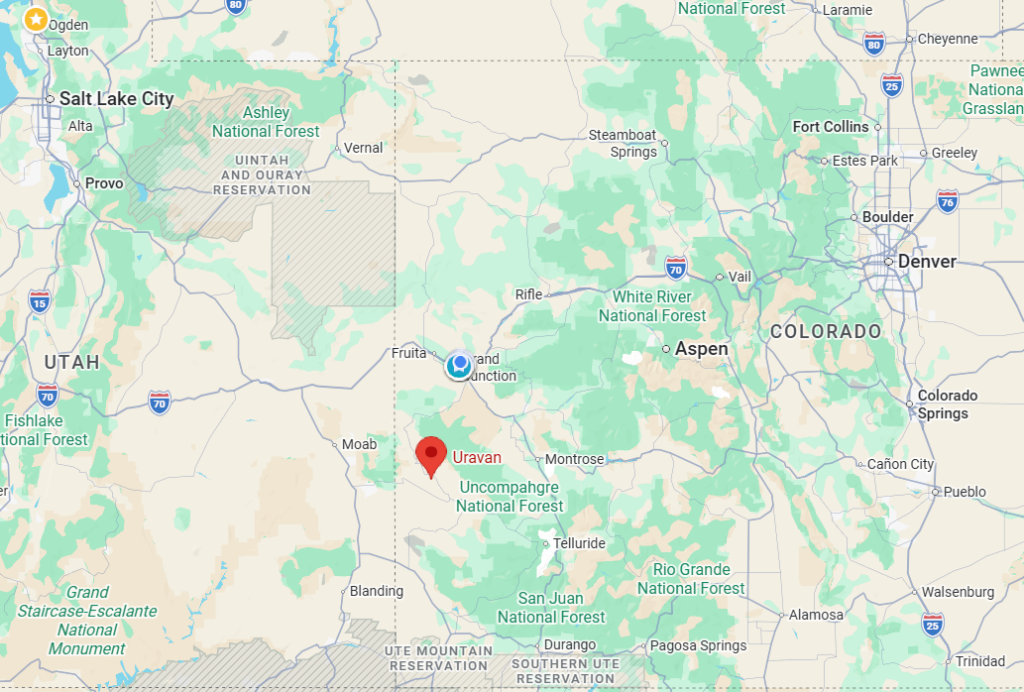
Uravan is located along Highway 141 in Montrose County, Colorado, roughly 90 miles southeast of Grand Junction. The interpretive area and Ball Park Campground are accessible via County Road E 22 off Highway 141.
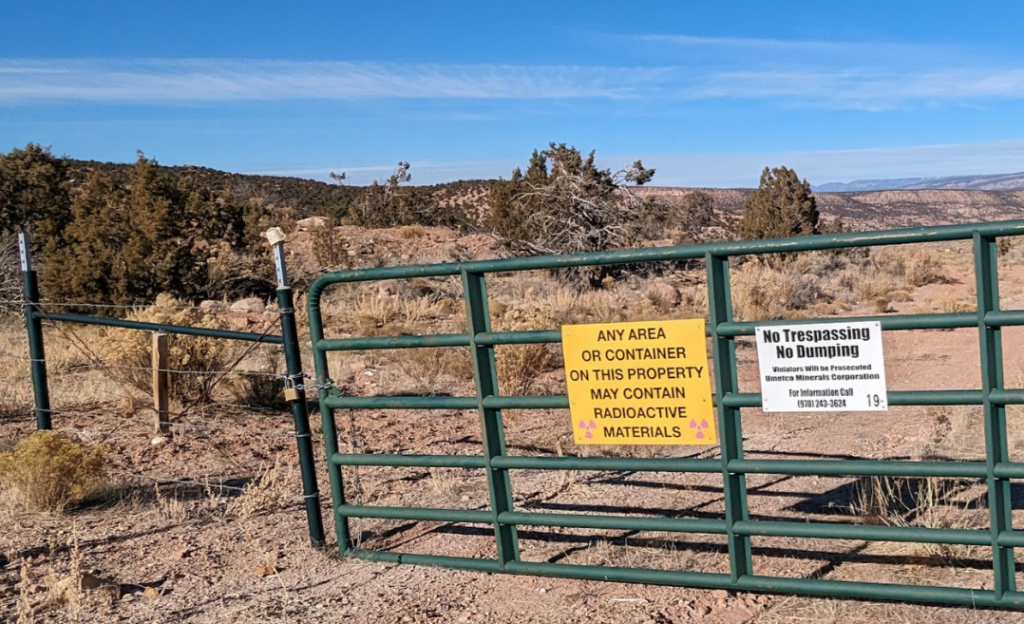
Photo: F R Lambrechtsen
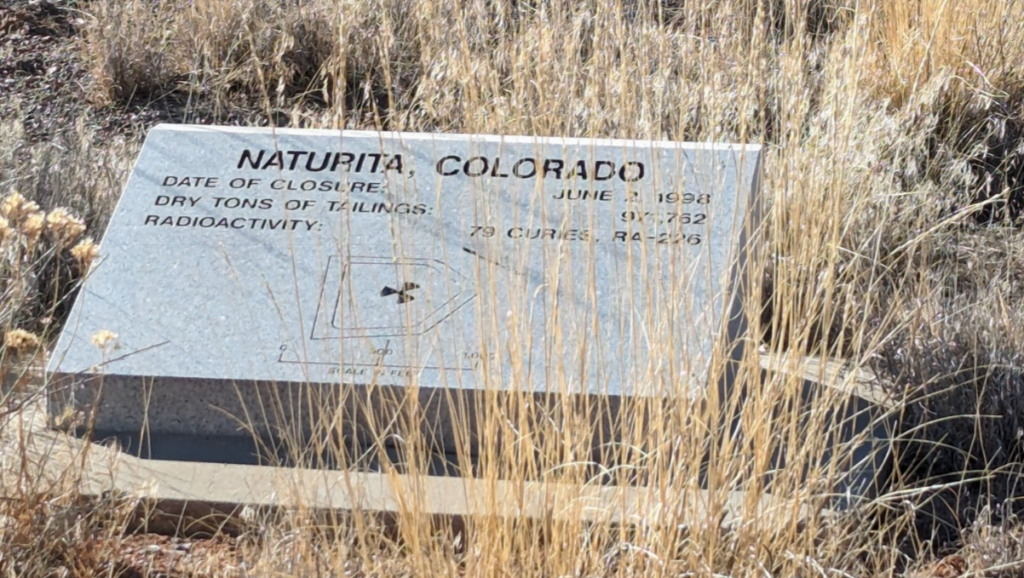
Photo: F R Lambrechtsen
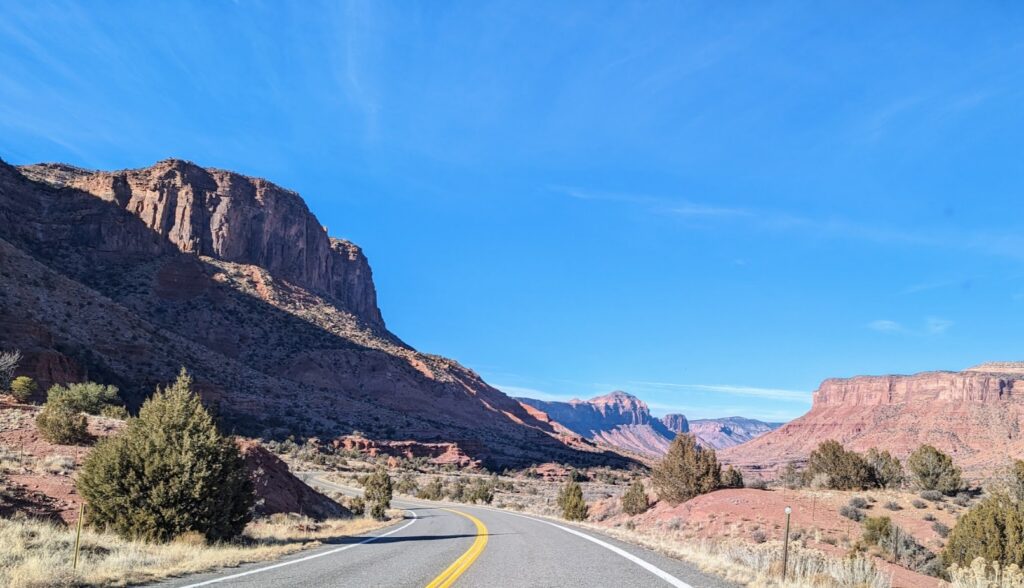
Photo: F R Lambrechtsen
Discover more from TheCuriousOnlooker
Subscribe to get the latest posts sent to your email.