Who Was the Unsinkable Molly Brown? Titanic’s Forgotten Heroine
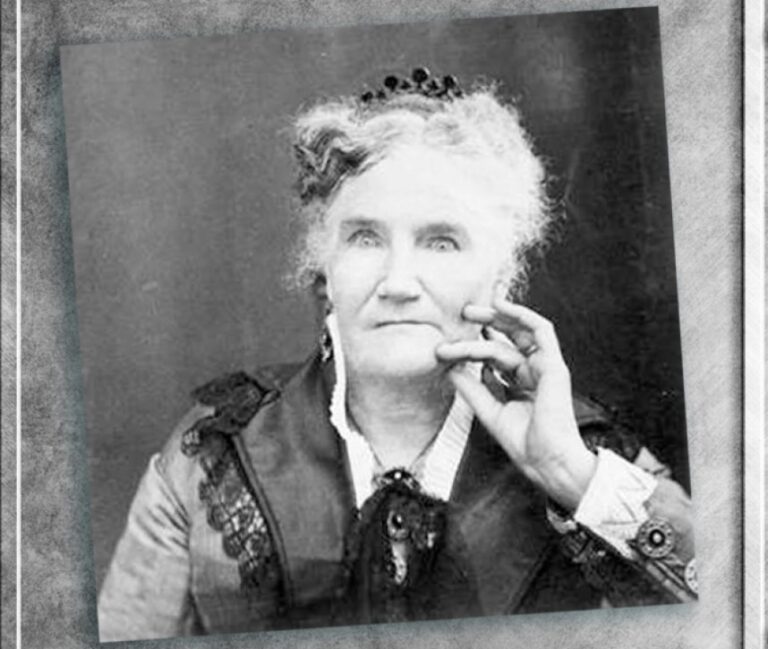
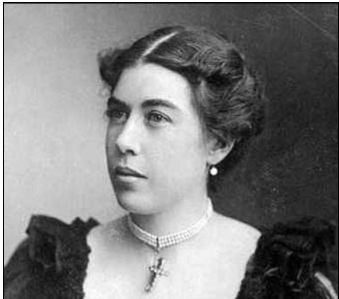
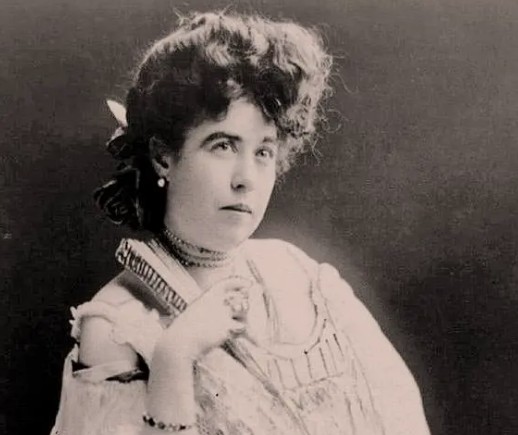
The mythical “Unsinkable Molly Brown” was a real woman. Her true name was Margaret Tobin Brown, and friends called her Maggie. She was born in Hannibal, Missouri, in July 1867. As a teenager, she moved west to the rough mining town of Leadville, Colorado. There, she married a mining engineer, raised two children, and helped poor families. Later, she survived the sinking of the Titanic. Her bravery that night turned her into one of the most famous women of the American West.
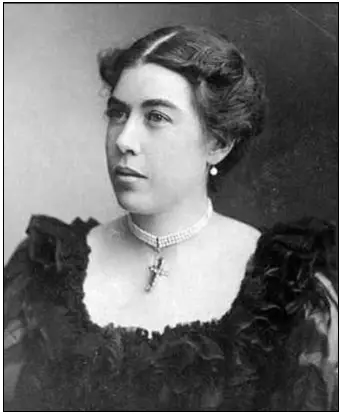
Table of Contents
From Missouri to the Mining Camps of Leadville
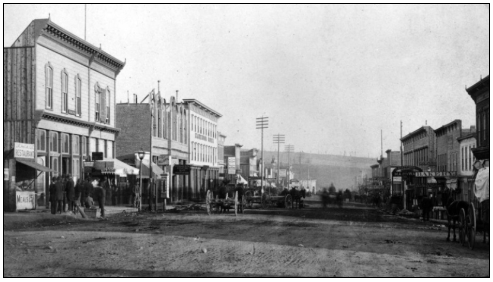
Margaret Tobin was born in July 1867 in Hannibal, Missouri, to Irish immigrant parents, John and Johanna Tobin. She grew up poor but clever and determined. In the mid-1880s, two of her older siblings moved west to Leadville, Colorado, a booming silver-mining town high in the Rocky Mountains, about two hours from present-day Denver. In 1886, eighteen-year-old Margaret packed her bags and followed them out west. Leadville’s silver boom had drawn thousands of fortune seekers from across the country, and Margaret was eager to join them.
Leadville was rough and crowded, full of miners chasing silver fortunes. Cabins were small, winters were brutal, and money was tight. Margaret found work and quickly learned the rhythms of mining-camp life. Within months, she met a young mining engineer named James Joseph Brown, known to everyone as J.J. Their meeting changed the course of her life. Friends later said she never once looked back at the life she left behind.
Margaret Brown’s Marriage and Mining-Town Activism
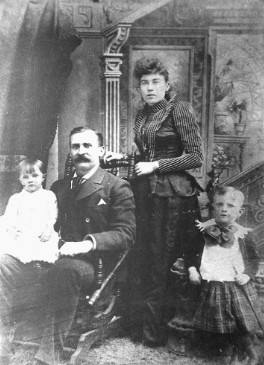
Margaret and J.J. Brown fell in love quickly and married in September 1886. Life was not easy at first, since J.J. worked long hours underground while slowly rising through the mining company’s ranks. The young couple welcomed two children: a son named Lawrence and a daughter named Catherine. Money was tight, but Margaret was resourceful, managing the household and never losing her curiosity about the wider world.
As a young mother, Margaret refused to stay quietly at home. She visited sick and injured miners who had no family nearby to care for them, and helped raise money for food, medicine, and proper burials. Margaret also campaigned to improve Leadville’s poorly funded public schools, arguing that miners’ children deserved a real education. Her efforts caught the attention of local leaders, who soon recognized her as someone who got things done. This early activism set the pattern for the rest of her life.
Gold, Wealth, and Life in Denver
In 1893, fortune smiled on the Browns when gold was discovered at the Little Johnny Mine, high in the mountains above Denver near present-day Boulder. J.J. was soon granted a partnership in the Ibex Mining Company, and the family’s circumstances changed almost overnight. The Browns moved into a grand house in Denver and joined the city’s wealthy social circles. In 1894, Margaret helped found the Denver Women’s Club, devoted to education, the arts, and civic improvement.
Margaret’s ambitions grew alongside her fortune. In 1901, she decided to run for the Colorado State Senate, a bold and unusual step for a woman of that era. J.J. did not support many of his wife’s “outside” activities, and tension grew between them. In 1909, after years of disagreement, Margaret and J.J. separated, though they never officially divorced, and Margaret still had access to the family’s wealth. She used this freedom to travel through Europe, eager to broaden her education and her view of the world.
The Unsinkable Molly Brown and the Titanic Disaster
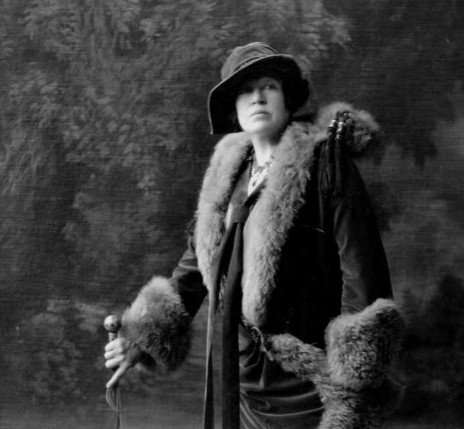
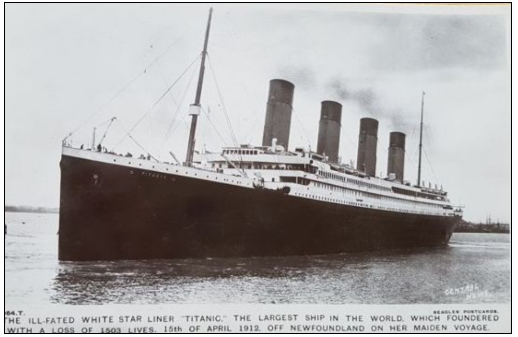
Early in 1912, Margaret was traveling through Europe when she learned that her young grandson back home had fallen seriously ill. She quickly booked passage home on the most famous ship of the age: the RMS Titanic. At 11:40 p.m. on April 14, 1912, the Titanic struck an iceberg in the icy North Atlantic, about 400 miles off the coast of Newfoundland. Though Margaret traveled in first class, she did not panic. She helped other passengers, mostly women and children, into the lifeboats before stepping aboard one herself.
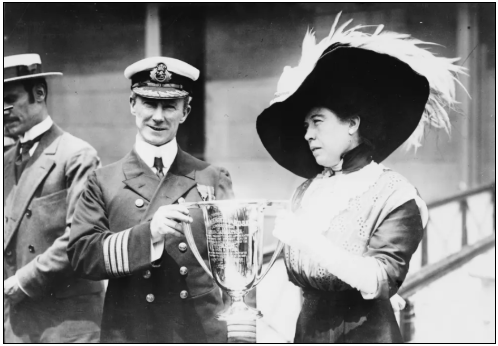
The Titanic sank just before 2:00 a.m. on April 15, 1912. Only about thirty percent of everyone aboard survived that freezing night. After the rescue ship RMS Carpathia arrived, Margaret organized a survivors’ committee to help passengers who had lost everything. Newspapers across America praised her calm courage, earning her a new nickname: “the Unsinkable Mrs. Brown.” Decades later, a Broadway musical and film told her story as The Unsinkable Molly Brown.
Fame, War Work, and the Final Years of Margaret Brown
Margaret’s fame after the Titanic gave her a louder voice for causes she cared about: safer conditions for miners, women’s suffrage, and better schools for poor children. In 1914, she briefly ran again for the Colorado State Senate but ended her campaign early. Instead, she returned to France to help the American Committee for Devastated France during World War I, rebuilding towns near the front lines and caring for wounded soldiers.
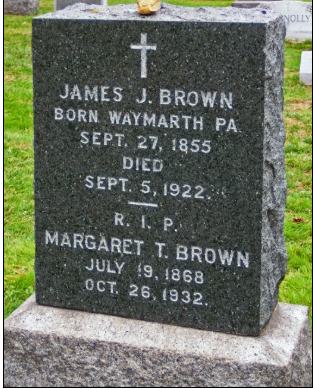
When J.J. Brown died in September 1922, reporters asked Margaret about her estranged husband. She told them, “I’ve never met a finer, bigger, more worthwhile man than J.J. Brown.” His estate left her only a modest inheritance. In her later years, Margaret studied acting and performed on stage. She died quietly in her sleep on October 26, 1932, at the Barbizon Hotel in New York City; doctors later discovered she had a brain tumor. She was buried beside J.J. in Westbury, New York.
Legacy in the West
Margaret “Molly” Brown’s story reaches far beyond one famous shipwreck. She represents the grit and independence found throughout the American West, where mining-camp women often worked as hard as the men who dug for silver and gold. Leadville and Denver both shaped her, and she, in turn, helped shape them. Today, her Denver mansion stands as the Molly Brown House Museum, open to visitors curious about her life. Margaret’s blend of toughness, generosity, and courage mirrors the spirit of countless Western pioneers whose names history has forgotten. The Unsinkable Molly Brown remains a lasting symbol of the resilience that built the Rocky Mountain West.
Other Resources
- The mollybrown.org site gives deep detail about the life and times of Margaret (Maggie) Brown.
- For more interesting information about interesting people, places, and things in Colorado, take a few moments to browse here.
Discover more from TheCuriousOnlooker
Subscribe to get the latest posts sent to your email.