
The Moon Came to Idaho: 7 Surprising Facts About Craters of the Moon
Idaho doesn’t look like the moon. Except in one odd corner of the state…where it does. Craters of the Moon National Monument is in south-central Idaho. It is a vast field of black lava, twisted rock, and deep caves. Astronauts once trained here. Scientists still scratch their heads about it. And almost no one outside the region knows it exists.
Table of Contents
A Volcano That Isn’t Done Yet
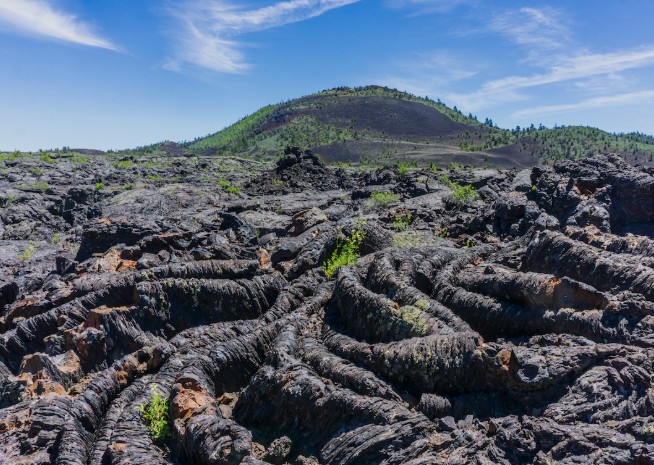
The lava fields at Craters of the Moon are young by geological standards. The most recent eruptions happened roughly 2,000 years ago. That is very recent in Earth’s history. Geologists believe the volcanic system is dormant, but not extinct. They estimate another eruption could happen within the next 1,000 years.
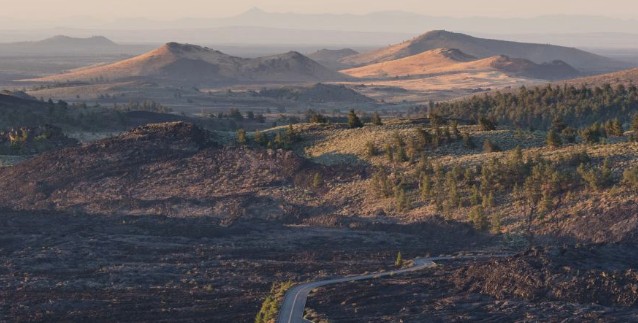
The monument sits on a geological area called the Great Rift. Basically, it’s a crack in the Earth’s crust that stretches nearly 60 miles across southern Idaho. Over the past 15,000 years, at least eight major volcanic periods built up the landscape people see today. The lava here came out hot and fast. It created smooth flows and rough, jagged flows. Both types of flows are clearly visible.
Where the Apollo Astronauts Practiced
In 1969, NASA sent a group of Apollo astronauts to Craters of the Moon to prepare for the moon landings. The terrain looked close enough to the lunar surface that scientists thought hands-on training there would help. Astronauts, including Alan Shepard and Edgar Mitchell, walked the lava fields and studied volcanic geology. They needed to know what rocks to collect once they got to the moon.
The training at Craters of the Moon helped the astronauts identify and collect the most important samples during the Apollo missions. Today, a small exhibit at the monument’s visitor center tells this story.

Left to Right: Alan Shepherd, Joe Engle, Gene Cernan, Ed Mitchell
Life Where Nothing Should Live
At first glance, the lava fields at Craters of the Moon look completely dead. Nothing seems to grow. Nothing seems to move. But the area supports a surprising range of animal and plant life.
Limber pines twist out of cracks in the rock. Dwarf buckwheat blooms in the summer. More than 2,000 insect species have been recorded here. Mule deer, pronghorn, and bobcats all pass through here. The monument protects 750,000 acres of land. It’s one of the largest national monuments in the continental United States.
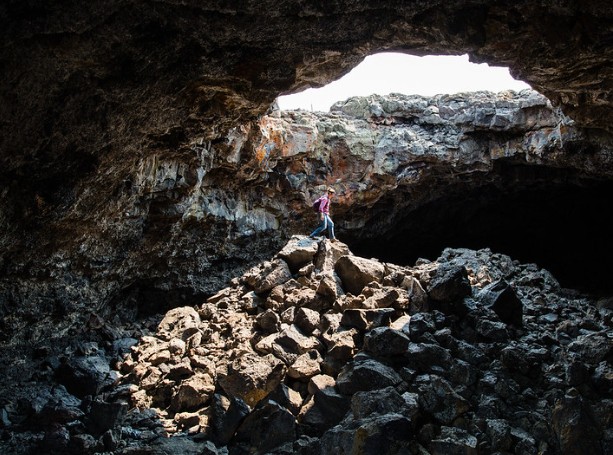
The caves at Craters of the Moon are amazing. The monument contains dozens of lava tube caves. These tubes formed when the outer shell of a lava flow cooled and hardened while molten rock kept flowing inside. When the flow stopped, it left a hollow tunnel behind. Some of these caves hold ice year-round, even in summer.
A Place the American West Mostly Ignored
The Oregon Trail passed not far from the Craters of the Moon area. Emigrants traveling west saw the black lava rock from a distance and decided to go around it. The terrain was nearly impossible for wagons to cross. There was very little water or grass. Early fur trappers had much the same reaction. They called the area the “Lava Beds” and traveled around it.
The federal government didn’t pay much attention either. Later, in 1924, President Calvin Coolidge established Craters of the Moon as a national monument. This was largely due to the lobbying of a man named Robert Limbert. He was an Idaho adventurer who crossed the lava fields twice on foot in the early 1920s. He wrote about his expeditions for National Geographic. His articles convinced the government in Washington that Craters of the Moon was worth protecting.
How to Get There
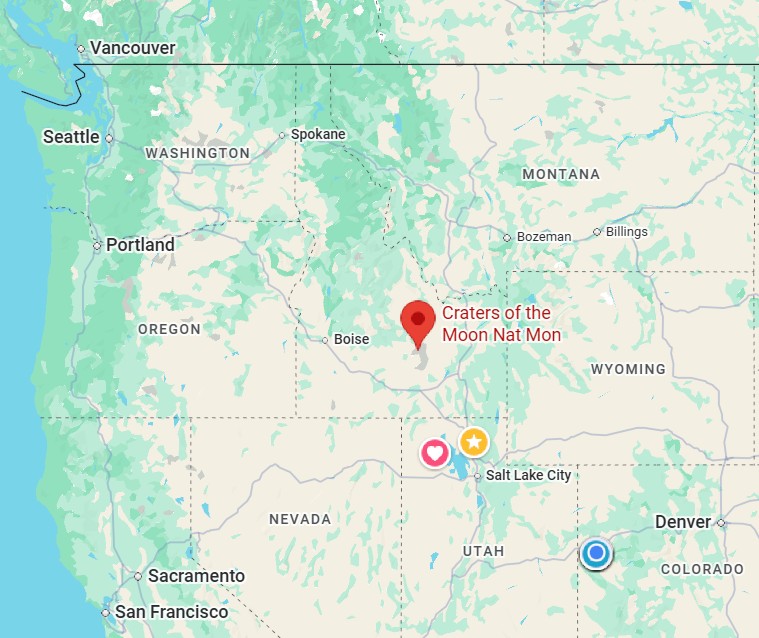
The Craters of the Moon National Monument is easy to get to by car. It’s directly on U.S. Highway 20, about 18 miles southwest of Arco, Idaho. From Boise, take I-84 East to U.S. 20 near Mountain Home. After that, head northeast. The drive from Boise takes about two and a half hours. From Twin Falls, take U.S. 93 North to the junction with U.S. 20, then turn west. That drive takes about an hour and forty-five minutes. The visitor center is clearly marked from the highway. More details about visiting Craters of the Moon can be found here.
Written in Lava
Craters of the Moon is where time and human history cross. The lava tells a story that began thousands of years before the first European pioneers crossed the Snake River Plain. It was too rough for wagons, too strange for settlers, and too remote for most Americans. But it has completely shaped the landscape of southern Idaho. Today, the monument draws more than 200,000 visitors a year. They come to walk on the moon without leaving Idaho. And they come to see land that is – geologically – still very much alive.
Discover more from TheCuriousOnlooker
Subscribe to get the latest posts sent to your email.