Biosphere 2: The Experiment in Arizona That Became a Living Laboratory
Biosphere 2 is a giant glass laboratory in Arizona. It was built to test life inside a closed world. In 1991, eight people entered its sealed doors. They planned to stay for two years. They would grow food and reuse their water. Even their air would depend on plants and soil. But the experiment brought some troubling surprises. Today, the University of Arizona uses the same place to study Earth’s changing climate. Its story began with a dream of living beyond Earth.
Key Points
- Biosphere 2 was built near Oracle, Arizona, to test whether people could live in a closed environment.
- Eight people spent two years inside, facing food shortages and falling oxygen levels.
- The original experiment ended, but its lessons helped scientists understand Earth’s living systems.
- Today, the University of Arizona uses Biosphere 2 to study water, soil, plants, and climate.
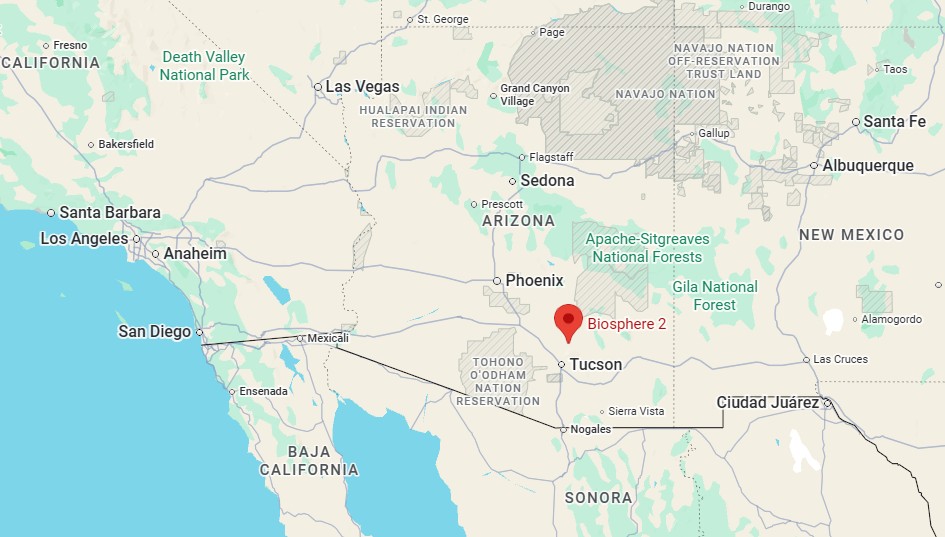
Map: Google Maps
A Glass World in the Desert
Biosphere 2 is located near Oracle, a small town north of Tucson, Arizona. Its name comes from a simple idea. Earth is Biosphere 1, our first living world. The new building would be a second, smaller world. It rose on land once used for ranching. John Allen, an ecologist and engineer, created the original plan for the project. Work began in the 1980s, backed by businessman Edward Bass. Could people live far from Earth one day? The builders hoped this place would offer some answers.
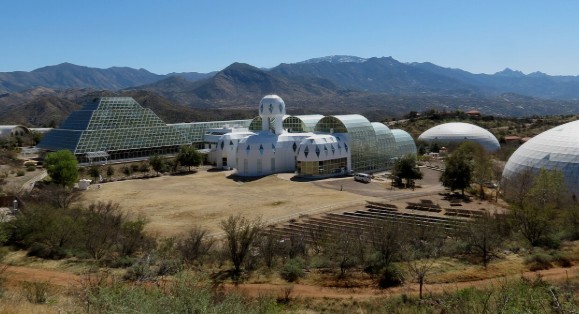
Inside the glass facility were several very different habitats. There was a warm rainforest and a small ocean. There was also a marsh, grassland, and desert. A farm would feed the people living there. Each habitat had its own plants and animals. The whole system covered more than three acres. Sunlight entered through the glass roof. Machines helped control heat and moving water. Yet the people hoped to reuse most materials. Air, water, and waste would move in cycles. Nothing was quite like this place before. The glass walls made nature easy to see. They also showed how hard nature was to copy.
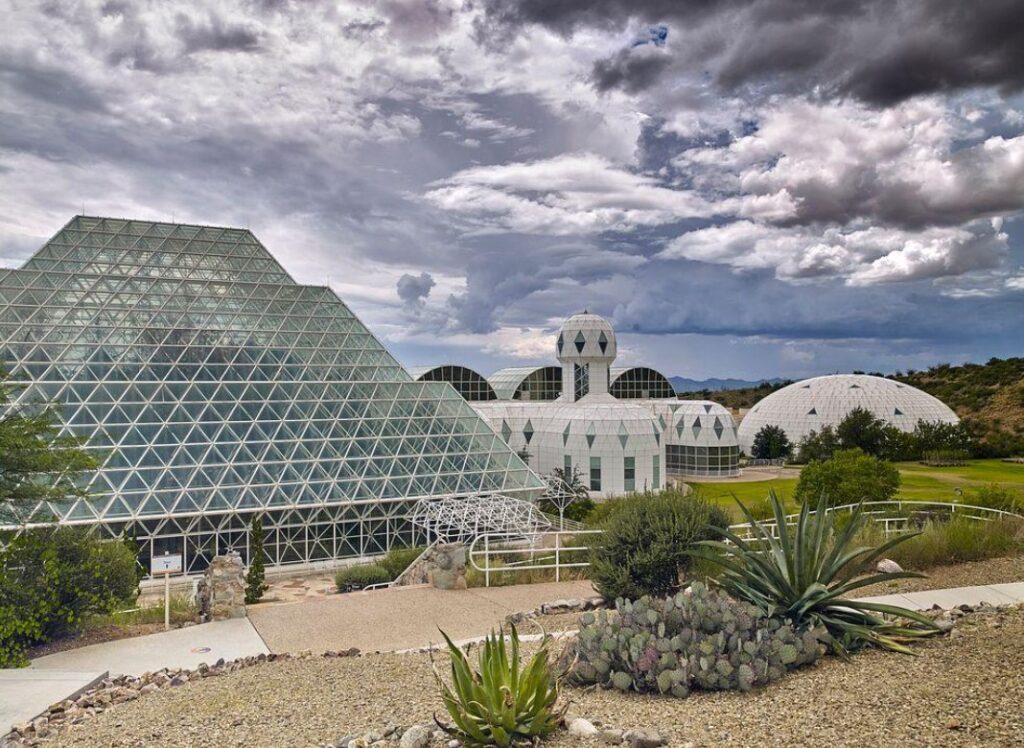
Photo: Frost Museum/Creative Commons
Two Years Behind Closed Doors
On September 26, 1991, eight people entered Biosphere 2. Four were women and four were men. They planned to remain inside until September 1993. Their work mixed farming, repair jobs, and science. They planted crops and prepared their own meals. They watched the plants, animals, and air closely. Friends could speak with them from outside. But ordinary visits were not part of the plan.
Life soon became harder than the crew expected. Some crops gave less food than hoped. The people grew hungry and lost weight. Worse still, oxygen in the air began to decrease. Tiny living things in the soil used oxygen. Carbon dioxide also reacted with exposed concrete. This hid part of the problem from view. By early 1993, oxygen had fallen sharply. Extra oxygen had to be pumped inside. The crew also faced strain and disagreement. Still, all eight finished the two-year stay. A second crew entered in March 1994. That mission ended in September after management disputes. The dream of a closed world had met reality. But the problems of Biosphere 2 gave scientists much to study.
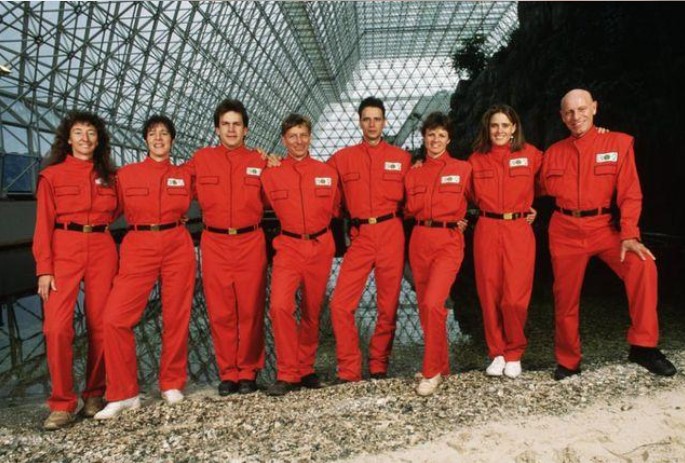
Photo: University of Arizona Press
A New Purpose for Biosphere 2
Biosphere 2 did not close after the first missions. Instead, its purpose began to change. Columbia University managed research there from 1996 to 2003. Scientists studied how plants responded to carbon dioxide. The glass building became a place for experiments. It no longer needed people living inside for years. Researchers could now change conditions and watch results.
The University of Arizona began managing Biosphere 2 in 2007. It took ownership in July 2011. The university wanted to study Earth’s living systems. The old glass world offered an unusual advantage. Scientists could test changes on a large scale. They could also measure things difficult to study outdoors. The original mission asked whether people could survive inside. The newer work asked how water, soil, and plants behave. Both questions matter beyond the desert. They help people understand what keeps life going. The building once stood for a possible future in space. Today, it helps explain our home planet.
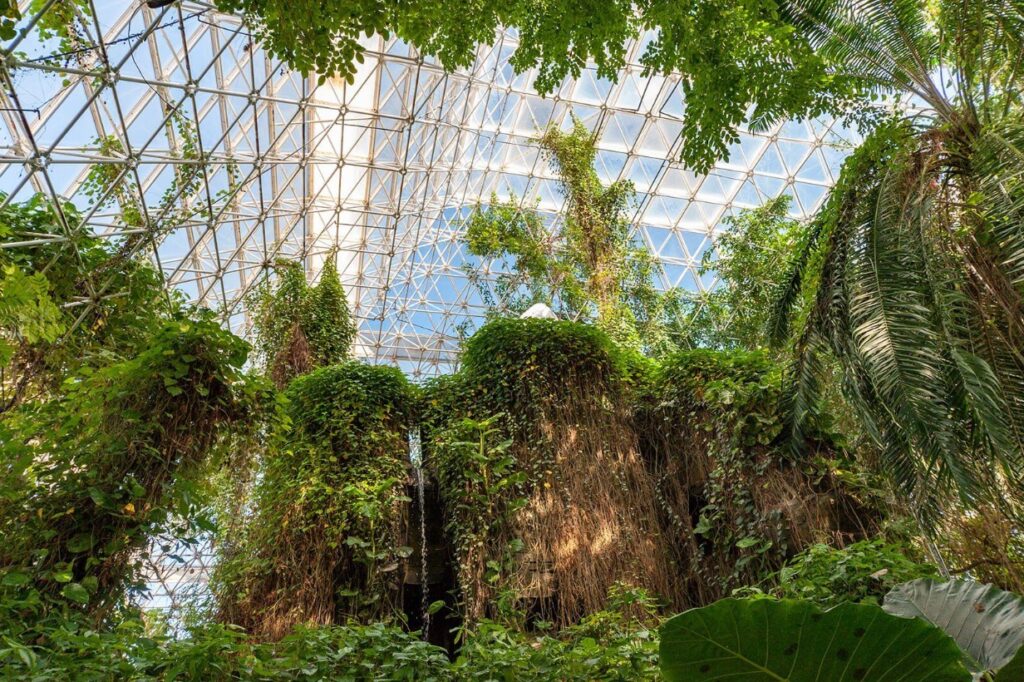
Photo: Jesuiseduardo/Wikimedia Commons
Lessons from A Living Laboratory
One major experiment at Biosphere 2 studies changing landscapes. It is called the Landscape Evolution Observatory. Large sloping beds hold crushed rock and soil material. Scientists add water and measure where it goes. They watch how minerals, microbes, and plants interact. This can show how new soil begins forming. It may also help explain water movement after rain. Such changes often take years to observe outside.
Other research uses the rainforest and the ocean. Scientists can study heat, drought, and changing air. They can see how living things respond together. A forest is more than a group of trees. Its soil, water, and air are connected. The same is true of the ocean. Visitors can explore parts of this unusual place. They can see habitats built under glass. They can also learn why the first mission struggled. The lesson is not that science always works at once. It is that a difficult test can reveal new questions. Biosphere 2 remains a place where answers can be found to new questions.
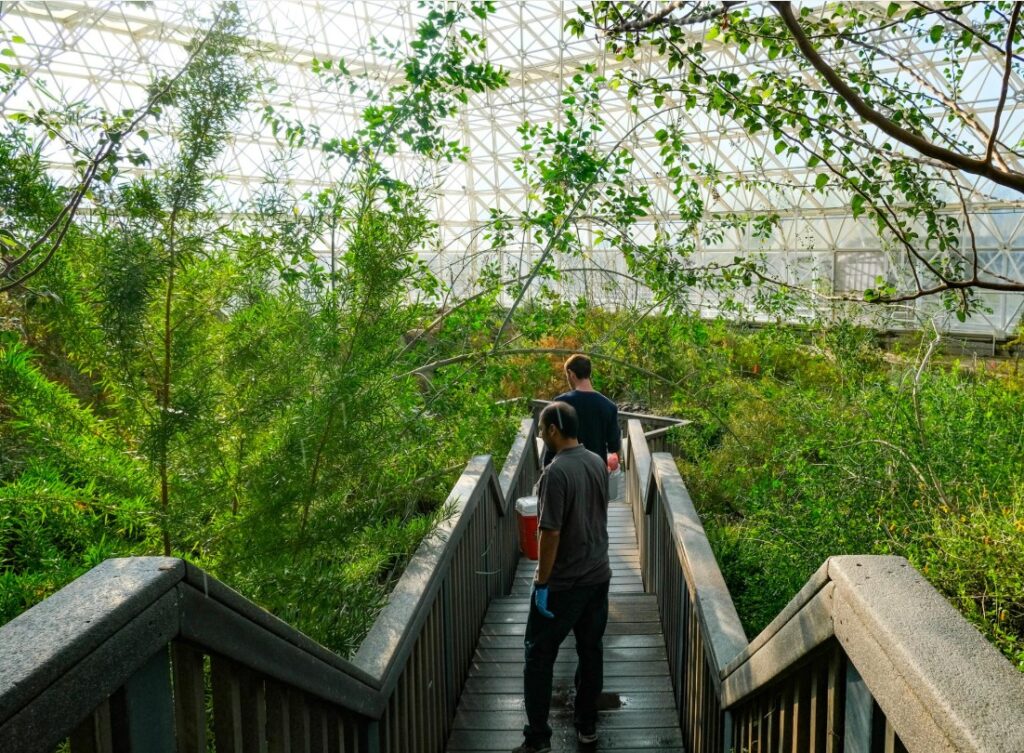
Photo: Brian Hunter/Wikimedia Commons
A Second World, Still Asking Questions
The American West has long drawn bold experiments. Some sought water, farms, or new ways to live. Biosphere 2 carried that same spirit into modern science. Its first crew learned that a small world is fragile. Today’s researchers study the same ties between land, air, and water. The glass walls remain in the Arizona desert. They no longer promise a simple escape from Earth. Instead, they offer a closer look at the one world everyone shares. Perhaps this is the more practical discovery.
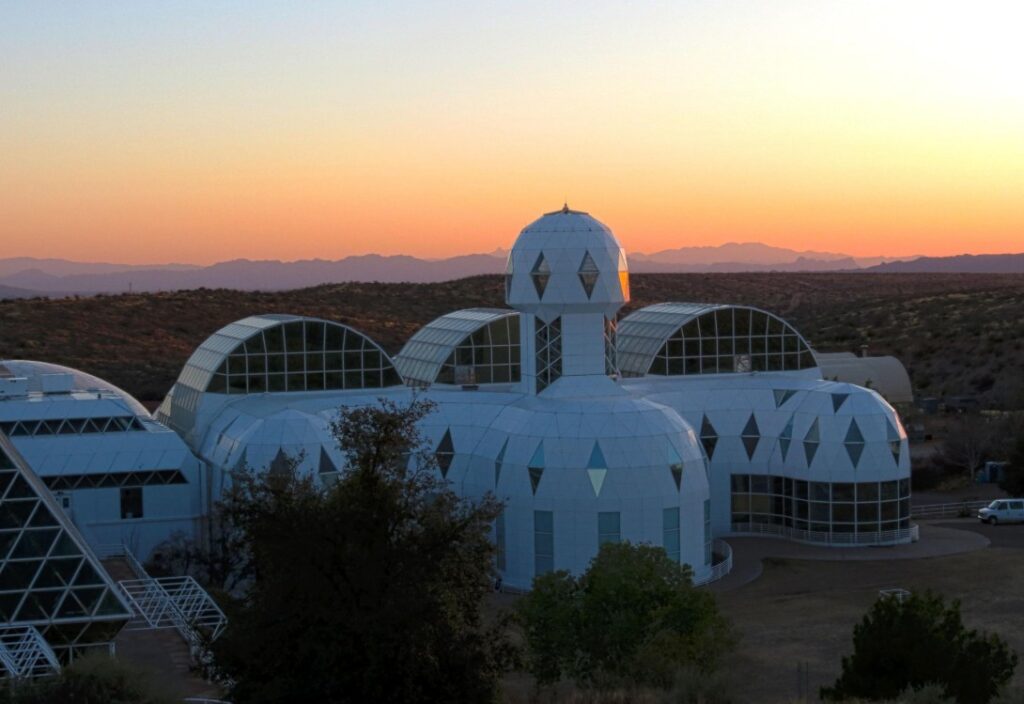
Photo: Photo: Katja Schulz/Wikimedia Commons
- Today, the University of Arizona’s Biosphere 2 research facility helps scientists better understand Earth’s living systems.
Discover more from TheCuriousOnlooker
Subscribe to get the latest posts sent to your email.