Hoover Dam: The Engineering Wonder in the Nevada Desert That Tamed a Wild River
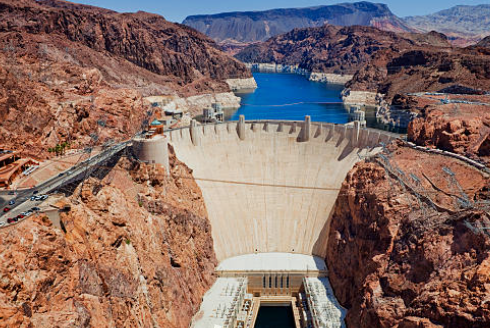
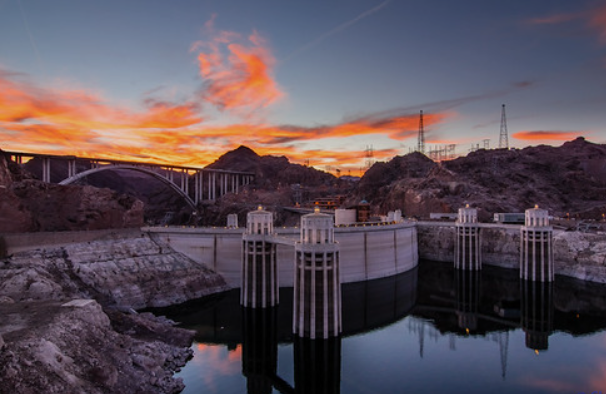
Hoover Dam is one of the greatest engineering achievements in American history. It stands 726 feet tall on the Nevada-Arizona border and holds back the mighty Colorado River. Built during the Great Depression, it brought electricity, water, and hope to millions of people across the American West. Before the dam existed, the Colorado River was one of the most dangerous and unpredictable rivers on the continent. After the dam was built, everything changed.
Key Takeaways
- Location & Scale: A 726-foot-tall concrete landmark spanning the Nevada-Arizona border in the Black Canyon of the Colorado River.
- Primary Purpose: Constructed to control seasonal river flooding while providing water and hydroelectric power to the Southwest.
- Rapid Construction: Built between 1931 and 1935 by over 5,000 daily workers, finishing two years ahead of schedule.
- Massive Materials: Contains enough concrete to pave a two-lane highway from San Francisco to New York, measuring 660 feet thick at its base.
- Power Output: Features a hydroelectric plant that spins massive turbines to power over one million homes.
- Historic Legacy: Dedicated by President Franklin D. Roosevelt on September 30, 1935, as the world’s tallest dam at the time.
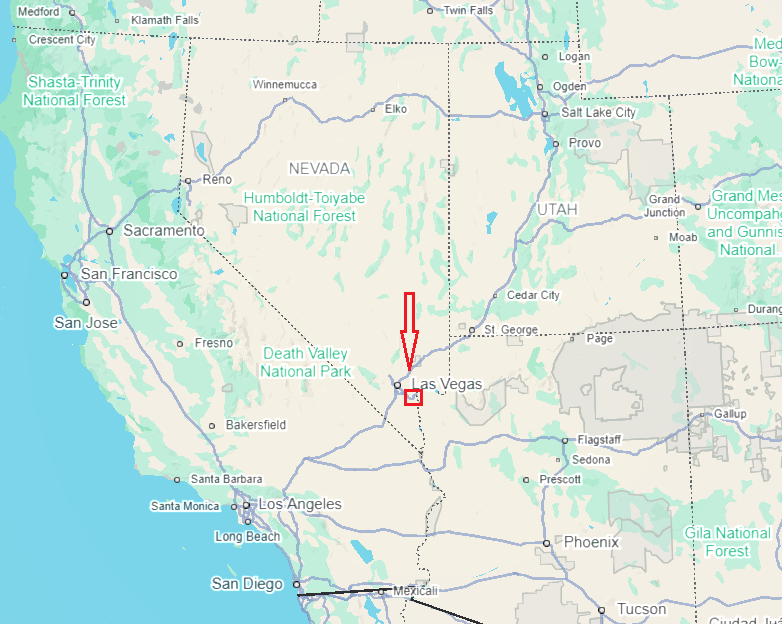
Map: Google Earth
A River That Could Not Be Trusted
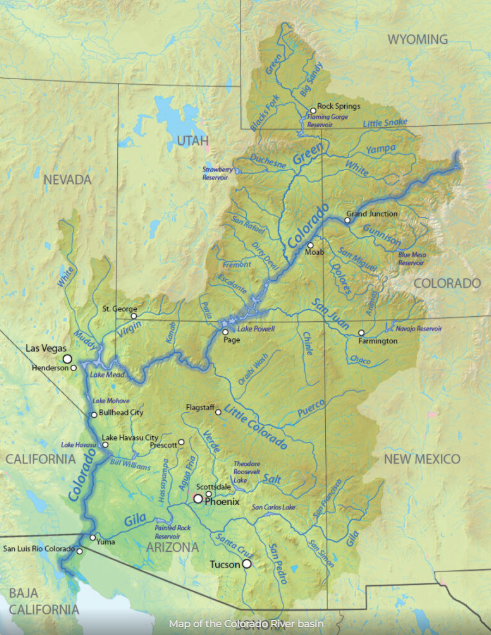
Before Hoover Dam was constructed, the Colorado River was a constant threat to the people who lived near it. Every spring, snowmelt from the Rocky Mountains sent walls of floodwater rushing south. Towns flooded. Farmland was destroyed. Then, in summer, the river would slow to almost nothing, leaving farmers with no water at all. The American Southwest was growing fast. Cities like Los Angeles needed reliable water and electricity. Something had to be done. That something turned out to be the biggest dam the world had ever seen.
The United States government chose a narrow canyon on the Nevada-Arizona border called Black Canyon as the site for the dam. The canyon walls were solid rock, strong enough to hold the enormous weight of water behind them. Planning began in the 1920s and construction officially started in 1931. The project was managed by a group of companies working together. They called their group: Six Companies, Inc. They had just seven years to finish the job.
Building the Impossible
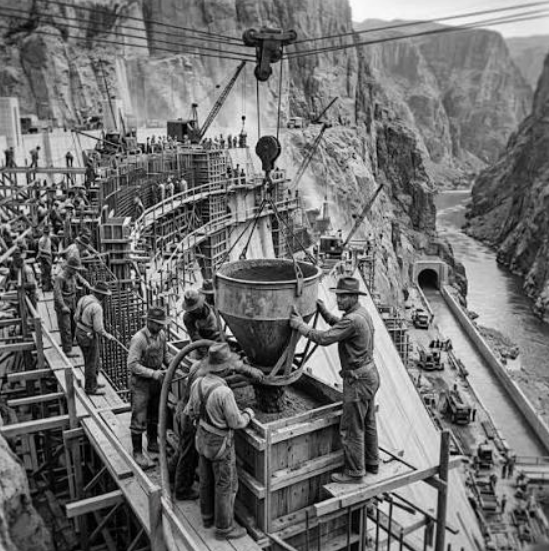
Hoover Dam’s construction was an incredible feat of human effort carried out in one of the harshest locations in America. Workers blasted four massive tunnels through the canyon walls (each one 56 feet wide) to divert the Colorado River away from the building site. Without this step, no work could begin. Thousands of men worked around the clock, seven days a week, in temperatures that often topped 120 degrees Fahrenheit on the canyon floor.
At its peak, more than 5,000 workers were on the job every single day. Workers dangled on ropes down sheer canyon walls, drilling and blasting loose rock. These men were called high scalers, and the work was incredibly dangerous. Concrete was poured into 230 separate interlocking columns rather than one solid block. The reason for this was clever engineering. If the dam had been poured all at once, the heat from the drying concrete would have taken 125 years to escape. The column method allowed workers to cool each block using a network of refrigerated pipes running through the structure. Even today, that cooling system is one of the most impressive parts of the story.
The Numbers Behind the Marvel
Without looking closely at the numbers, the scale of Hoover Dam is difficult to imagine. The dam contains enough concrete to pave a two-lane road from San Francisco, California, all the way to New York City…a distance of nearly 3,000 miles. At its base, the dam is 660 feet thick. That is roughly the length of two American football fields placed end to end. The reservoir it created, Lake Mead, stretches 112 miles back into Nevada and Arizona and remains one of the largest man-made lakes in the United States.
The dam was completed two years ahead of schedule in 1935. This was remarkable given the sheer size of the project and the difficult conditions workers endured. President Franklin D. Roosevelt dedicated the dam on September 30, 1935. He called it a “twentieth century marvel.” He was not exaggerating. The dam’s hydroelectric power plant generates enough electricity to serve more than one million homes. Seven states and Mexico depend on the Colorado River’s water, much of it managed through the systems Hoover Dam made possible. Without it, modern cities like Las Vegas, Nevada, Phoenix, Arizona, and Los Angeles, California would look very different today.
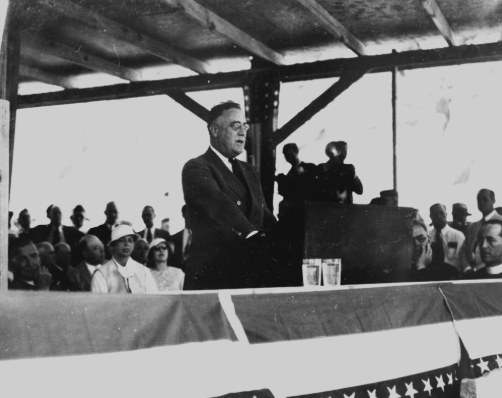
September 30, 1935
A Important Landmark That Still Earns Its Place
Today, Hoover Dam is one of Nevada’s most visited and most recognized landmarks. It draws nearly one million visitors each year to the rugged canyon on the state’s southern border. When it was completed in 1935, Hoover Dam was the tallest dam in the world and the largest hydroelectric power station ever built. Those records have since been broken by dams in other countries, but no other structure tells the same kind of story. It was built by ordinary men, in extraordinary conditions, during one of the hardest periods in American history. The Colorado River still runs through it. The turbines still spin. And the concrete, poured column by column nearly a century ago, still holds back the mighty Colorado River.
- If you’re curious, here are more articles about interesting people, places, and things in Nevada.
Discover more from TheCuriousOnlooker
Subscribe to get the latest posts sent to your email.