
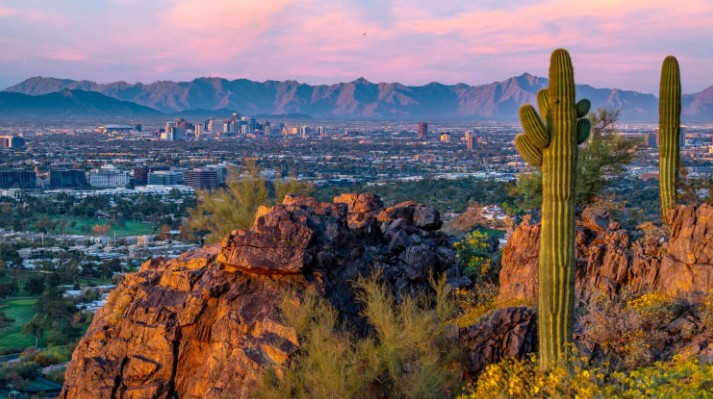
Who Was the Pioneer that Helped Phoenix Arizona “Rise from the Ashes”?
John Swilling was the pioneer whose canal project helped create Phoenix, Arizona, in 1867. In the dry Salt River Valley, Swilling saw faint marks in the earth that many travelers would have missed. The marks were old Hohokam canals. Swilling believed water could return to the abandoned farmland. With shovels, mules, and a small group of settlers, the former soldier and miner brought Salt River water to dry fields. Green crops soon replaced dust, and a settlement began.
Key Takeaways
- John Swilling helped lay the groundwork for Phoenix, Arizona. In 1867, he recognized that the Salt River Valley’s ancient canal routes could be reused to bring water back to dry farmland.
- Swilling’s irrigation project helped turn desert land into productive farmland. He organized the Swilling Irrigating and Canal Company, whose canals carried Salt River water to fields where crops soon began to grow.
- Phoenix grew from the settlement that formed around these irrigated fields. The community was first known by names including “Swilling’s Mill” before becoming Phoenix, a name associated with rebirth from the desert.
- Ancient Hohokam canals were central to Swilling’s vision. He saw that earlier inhabitants had successfully irrigated the Salt River Valley and believed their example could be followed again.
- John Swilling’s legacy is closely tied to the origin story of modern Phoenix. Although he died in 1878 before seeing the city’s later growth, the article presents his irrigation work as a key step in Phoenix’s development.
Source: Arizona Archives, Carl T. Hayden Collection
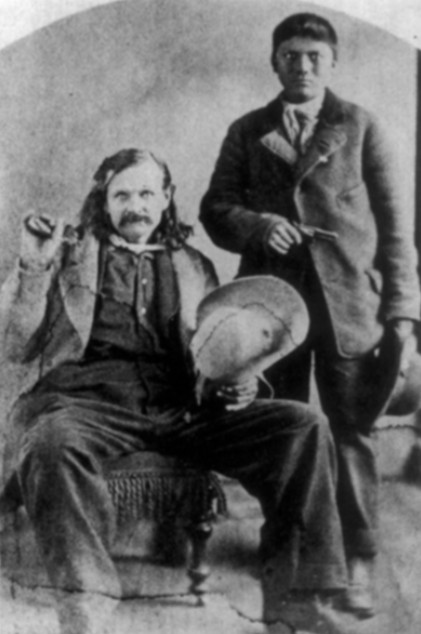
Who Was John Swilling?
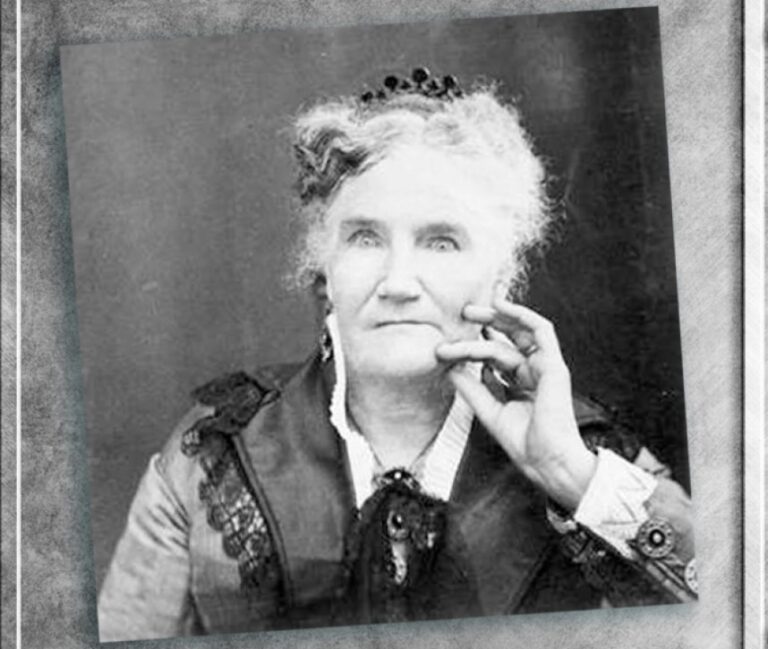
John William Swilling came to Arizona after a restless early life that took him through several kinds of work. John Swilling was born in South Carolina in 1830 and grew up adventurous. As an adult, John Swilling worked as a miner, rancher, and soldier. John Swilling also fought in the US Civil War. After the war, John Swilling traveled west for a fresh start in the Arizona Territory. That varied past gave John Swilling practical experience with hard travel, rough work, and uncertain frontier life.
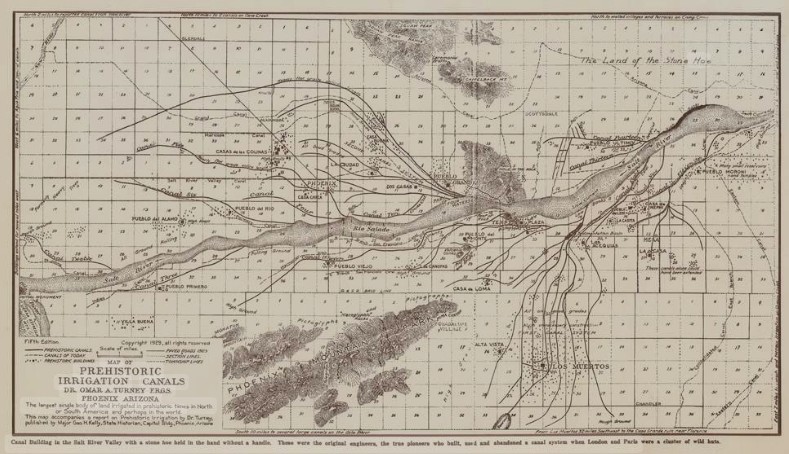
John William Swilling reached the area near present-day Phoenix in 1867 because the Salt River Valley seemed full of possibility. John Swilling found brown earth, distant mountains, and the broad Salt River in a quiet valley. Many travelers saw a dry and empty desert, but John Swilling looked for signs that farming could return. John Swilling noticed the remains of an older world beneath the dust. The Hohokam canals gave John Swilling a reason to think that people had once made the valley productive.
Source: Wikimedia Commons
The Idea That Changed Everything
John Swilling changed the future of Phoenix by recognizing that ancient Hohokam canals could be used as a guide. One afternoon, Swilling saw faint lines cut into the Salt River Valley dirt. The lines were not natural marks. The Hohokam, ancient Native American people, had built the canals hundreds of years earlier. Hohokam farmers had carried water to their crops by digging irrigation canals. Swilling understood a simple lesson: if the Hohokam had brought water into the valley before, settlers could bring water there again.
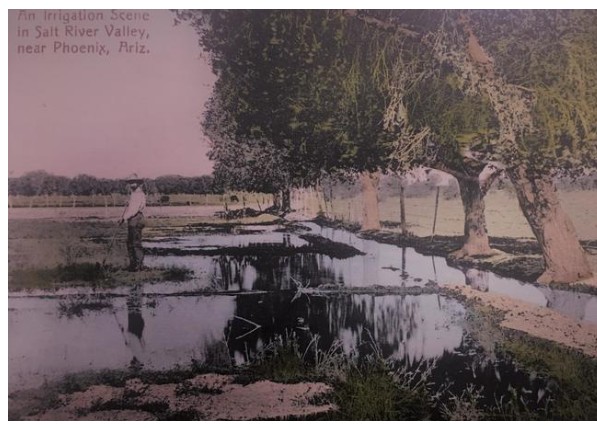
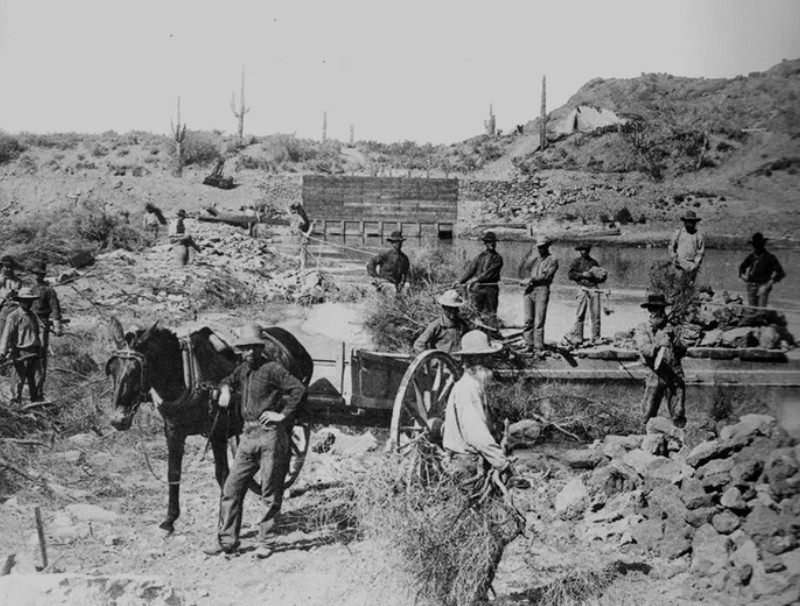
Swilling acted on the Hohokam canal lesson by organizing settlers into the Swilling Irrigating and Canal Company. In 1867, the Swilling’s canal company built a small canal from the Salt River to dry fields. Swilling and settlers made the channel with hard labor. Within a year, green crops were growing where dust had covered the land. The canal showed that John Swilling’s plan was more than a dream. The canal also gave new families a reason to stay near the fields and build a community.
Source: Arizona Archives, Carl T. Hayden Collection
The Hard Life of a Pioneer
Life in early Phoenix was not easy. Supplies came from far away and summer heat baked the land. Swilling worked hard but he never became rich. He helped travelers, fed newcomers, and earned a reputation for being kind and generous. His life was also affected by poor health and hardship.
In 1878, after years of rough living and illness, Swilling died before seeing how big his dream would grow. He was buried in Yuma, Arizona, far from the canals that made his vision real.
Source: Mesa History Museum
What Can we Learn from John Swilling Today?
When visitors look out over Phoenix today, with its wide streets, tall buildings, and palm trees, it can be hard to imagine the city’s humble beginnings. But underneath the city lies the same dirt that John Swilling once tilled, including the same old canal lines that still shape the city’s layout today.
Few newcomers to Arizona understood the past as he did. He honored the Hohokam by following in their footsteps and blending their old wisdom with new effort. Today, John Swilling’s story reminds us that great achievements can grow from simple dreams.

Source: Dennis Webb
- If you’re curious, here are more articles about interesting people, places, and things in Arizona.
Discover more from TheCuriousOnlooker
Subscribe to get the latest posts sent to your email.


Wow, Frans, that was very very interesting. I was not aware of the history and the canals that were built hundreds of years ago which were lying in the way for us to discover and lead the way to have all of modern day canals that bring the valley water. How do you find the history and come about writing something like this that was so fascinating?
Wayne, thanks for your generous comments. I’m glad you liked the article. How do I find the history that end up in these articles? When we were growing up, we had to go to the library and do research in encyclopedias, books, and magazines. We’re fortunate today. We have so much information – literally – at our fingertips. I use Google searches a lot. There’s good ‘ol Wikipedia. There’s Biography.com. Also, each state tends to have it’s own historical databases that have a lot of good information. I come across topics that make me “curious” myself and then I try to put together interesting little articles about those topics. Hopefully, there’ll be more TCO (TheCuriousOnlooker) articles that you’ll find interesting in the future.