How Did A Grove of Trees Help End World War 2?
How did a quiet place like Los Alamos New Mexico, become so important? Poplar trees are common in North America. Many times they are called cottonwood trees because they shed fluffy white “cotton” in spring. The “cotton” contains seeds that are picked up by the wind and carried to new places to germinate and grow. Poplar in Spanish is: Alamo. A grove of several poplar trees is: Los Alamos. Hold that thought….
Table of Contents
A Secret Race to Save the World
In the early 1930’s, Adolf Hitler and his National Socialist (Nazi) Party came to power in Germany. On September 1st, 1939, World War 2 began when Germany invaded Poland. The entire world became involved in war. It did not end until August 1945.
Scientific discoveries accelerated from the late 1800’s into the 1930’s. Nikola Tesla demonstrated wireless radio signals in 1891. Albert Einstein first published his theory of special relativity in 1905. In December 1938, two German scientists, Otto Hahn and Fritz Strassman, successfully proved nuclear fission (the splitting of the atom). This meant, in theory, an atomic bomb could be created. While the United States did not officially enter World War 2 until December 1941, American and other Allied scientists were aware that Germany would probably work on an atomic bomb.
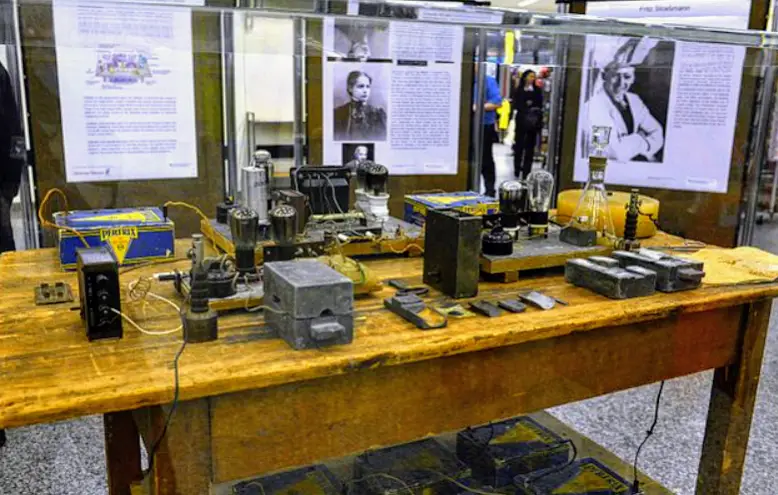
Photo – Wikimedia Commons
Finding a Safe Place in the Mountains
It could be said that the world’s first nuclear arms race began here. Early in 1942, the United States started work on an atomic bomb and called this secret effort the Manhattan Project. The name came from the project’s headquarters office in New York City.
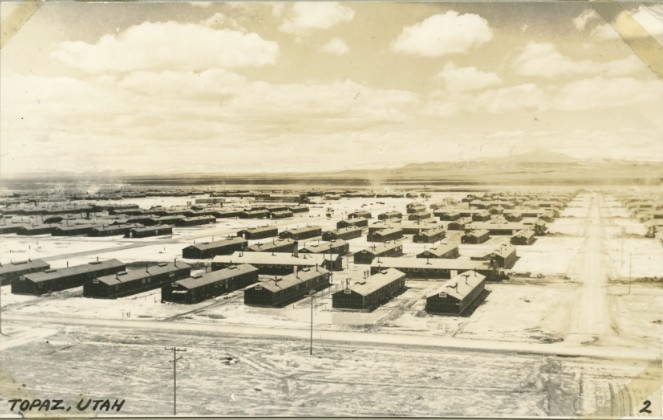
In September 1942, the leadership of the Manhattan Project thought it would be best to have one central laboratory. They wanted a place where scientists could do their work in a secure environment. A remote location was considered best. The shortlist included locations in Nevada, New Mexico, and Utah.
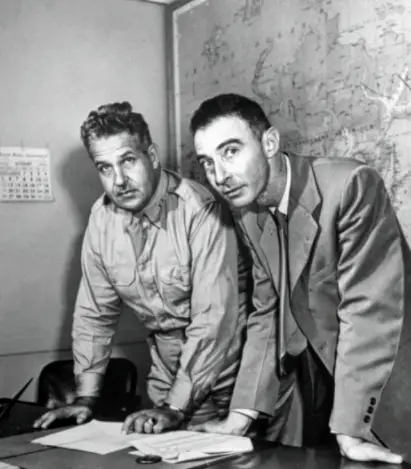
Key Leaders of the Manhattan Project
Photo – Wikimedia Commons
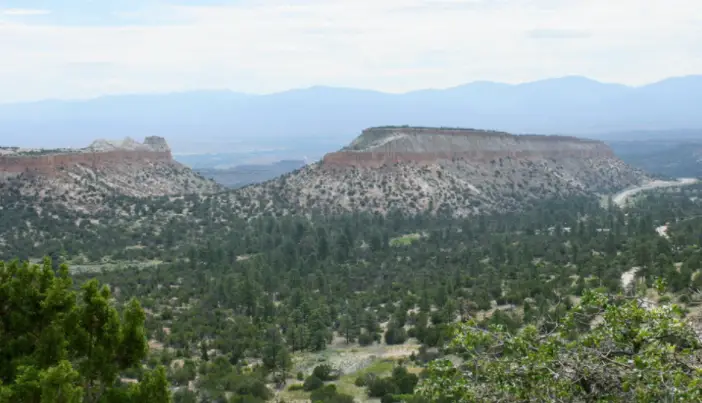
The site chosen was at Los Alamos, New Mexico. It was inland, far away from large coastal cities. It was high in the mountains, quiet, secluded, and protected. And it was still at a time before satellites could discover secret facilities from space. It was a place near…a grove of poplar trees.
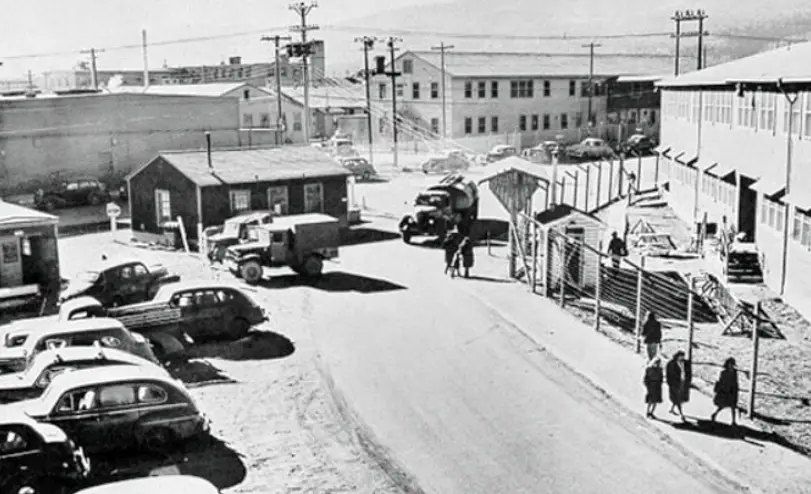
Photo – Wikimedia Commons
Building the First Atomic Bombs
In April 1943, work on different bomb designs began in earnest at the Los Alamos laboratory. Construction on nuclear reactors began at sites in Oak Ridge, Tennessee, and Hanford, Washington. Explosive material was needed for the first atomic bombs and reactors at these locations would provide Uranium isotopes and Plutonium.
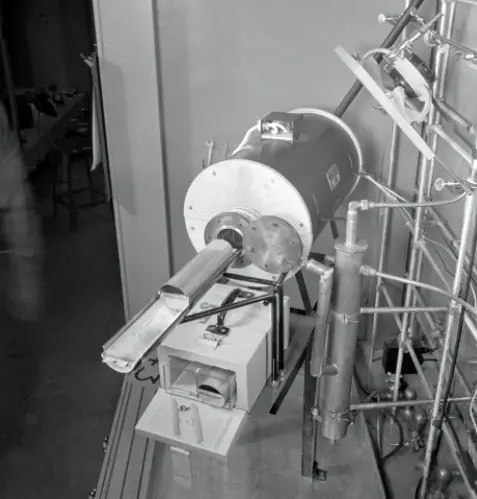
Photo – Wikimedia Commons
In 1944, the reactors in Tennessee and Washington started making fuel that the teams in Los Alamos could use for their tests. Designs changed and refinements continued. Toward the end of the year, the German Army seemed to be in retreat. In December, this changed when German tanks broke through Allied lines in what later was called the Battle of the Bulge.
Early in 1945, US forces in the Pacific were taking heavy losses. Japanese forces were heavily entrenched on islands leading back to the Japanese homeland. These were islands like Saipan, Iwo Jima and Okinawa. Tokyo was bombed heavily, but Japanese leadership showed no signs of giving in.
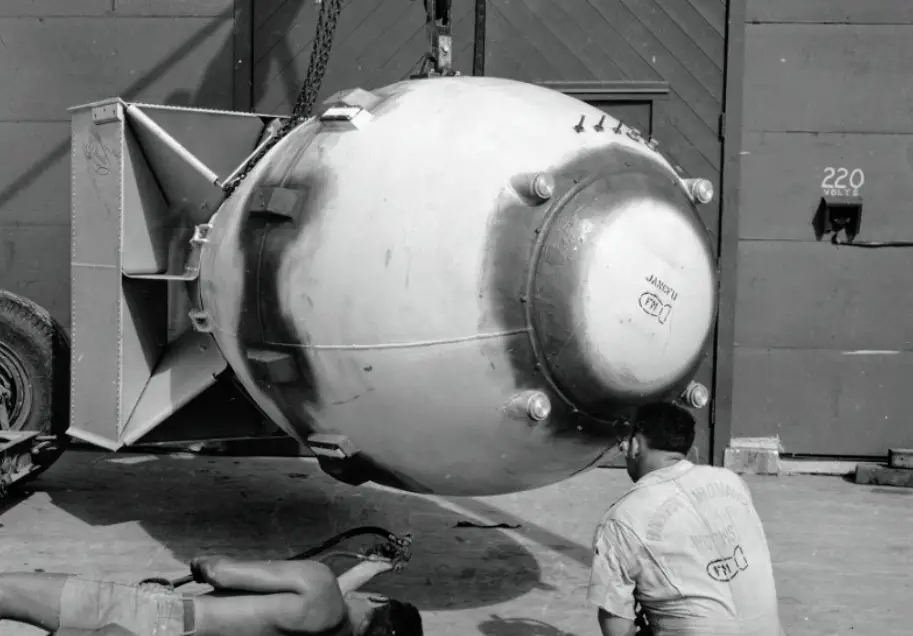
Photo – Wikimedia Commons
Germany surrendered and the war in Europe ended on May 7, 1945. Allied leaders feared too many deaths if the war continued on too long in the Pacific. Bombing of the Japanese homeland continued. Allied leaders threatened the Japanese government with “utter destruction.” The Japanese vowed to fight on.
The Day the World Changed Forever
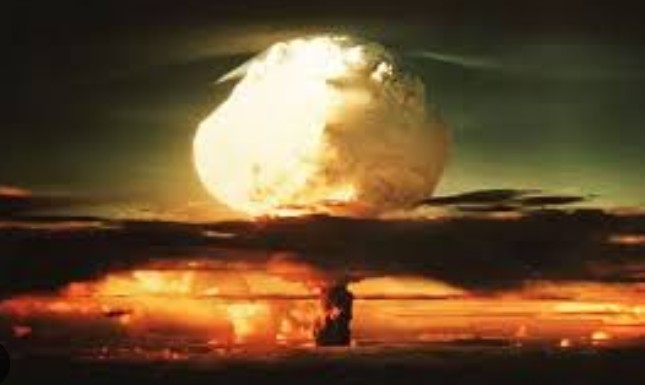
About 250 miles south of Los Alamos, the world’s first nuclear explosion was set off near Alamogordo, New Mexico. That was on July 16, 1945. Three weeks later, on August 6th, a B-29 bomber dropped another bomb called “Little Boy” on the Japanese city of Hiroshima. The blast was equal to about 13 kilotons of TNT. Japan’s leadership did not give in. Three days later, on August 9th, a B-29 dropped another atomic bomb on the city of Nagasaki. That bomb, called “Fat Man,” was more powerful, about 19 kilotons of TNT. Five days later, the Japanese government surrendered. World War 2 was over.
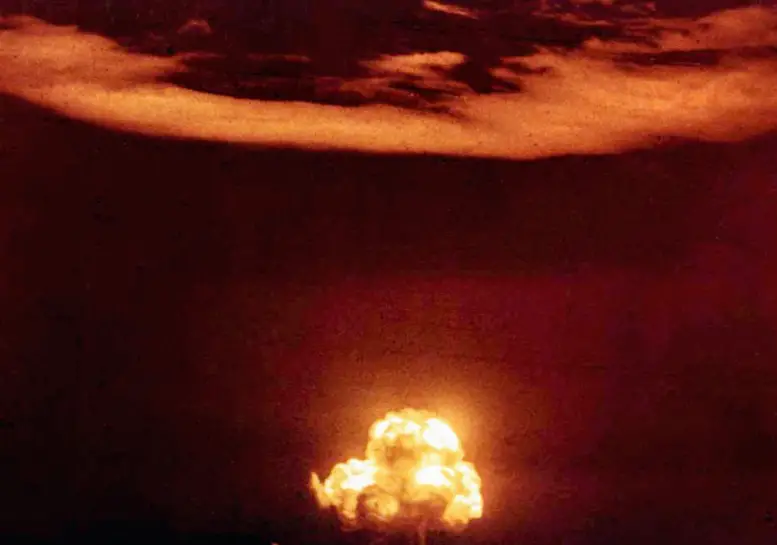
Photo – Wikimedia Commons
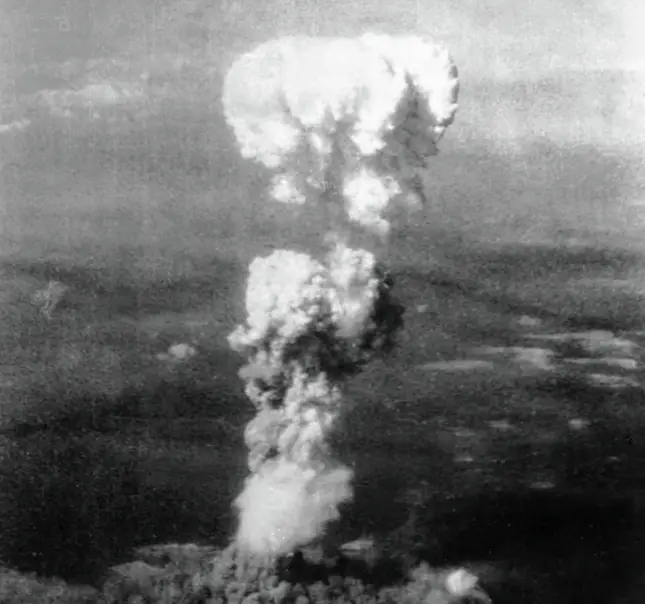
Photo – Wikimedia Commons
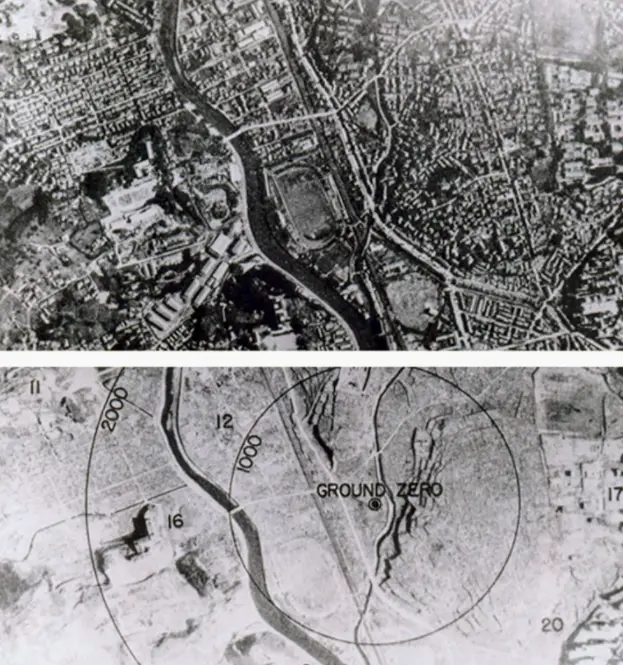
Photo – Wikimedia Commons
Both of the atomic bombs dropped on Japan were created at the Los Alamos, New Mexico, laboratory. Estimates put total deaths from World War 2 at about 75 million. Of these, 20 million were military. Japanese deaths from the Hiroshima blast have been calculated at 140,000. Deaths from the Nagasaki blast have been calculated at 70,000.
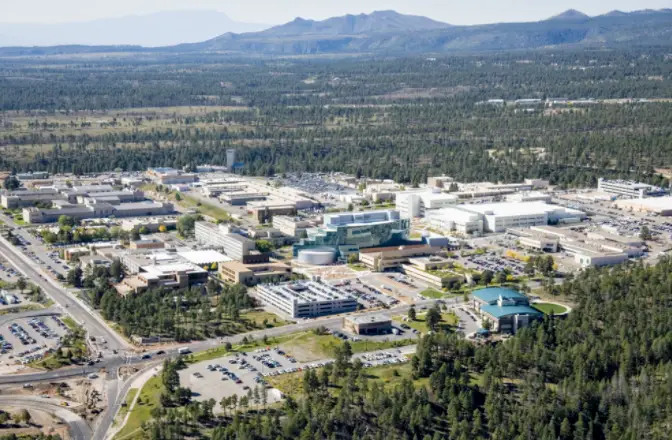
Photo – Flickr/Los Alamos National Laboratory
The Hill of Discovery Today
The lab at Los Alamos New Mexico did not close after the war. It is still a very busy place today. It is now called the Los Alamos National Laboratory. People do not make atomic bombs there anymore. Instead, they use science to solve big problems. They work on clean energy and medicine. They also study the stars and the Earth. It is one of the most important science centers in the United States. Many smart people still live and work on “the Hill.”
The history of this place is a big part of the American West. It shows how a quiet spot can become the center of the world. People visit the area to see the old buildings and the beautiful trees. They think about the scientists who lived there in secret. The story of Los Alamos reminds us of the power of human ideas. It started with a grove of poplar trees. It ended with a discovery that changed the course of time.
And all of this at a grove of poplar trees in New Mexico…

- For more details on the Ranch School and the secret city’s daily life, browse through what’s available here.
- If you’re curious about more interesting people, places, and things in New Mexico, have a look at the additional stories here.
Discover more from TheCuriousOnlooker
Subscribe to get the latest posts sent to your email.