Who Are the Ancestral Puebloans? 5 Hidden Secrets Revealed
Imagine a village built into the side of a cliff, hundreds of feet above the canyon floor. No elevators. No ladders left behind. Just empty rooms and silence. This is the world of the Ancestral Puebloans, once known as the Anasazi. They lived across the Four Corners region of Arizona, New Mexico, Utah, and Colorado for thousands of years. Then, around 1300 AD, they vanished from their famous cliff cities. But they did not disappear. Their story continues today.
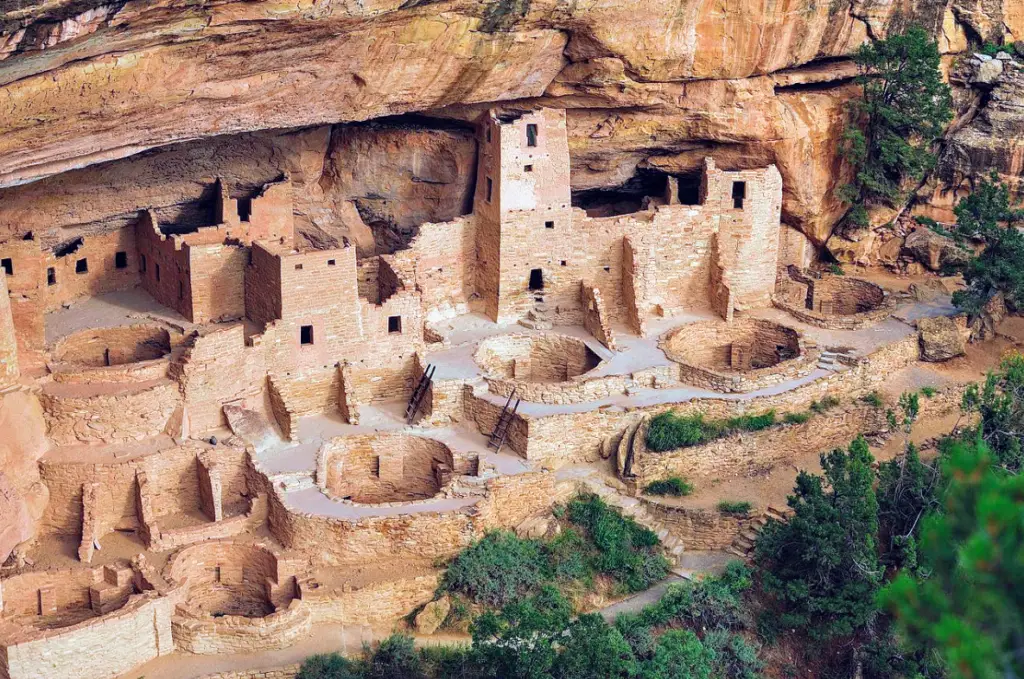
Photo: Wikimedia Commons (Sep 2009)
Table of Contents
Master Builders of the Ancient Southwest
Long before Europeans set foot in North America, the Ancestral Puebloans were already master builders. Archaeologists believe their culture began as early as 7000 BC, making them one of the oldest continuous cultures in North America. By 750 AD, they were constructing multi-story stone and adobe homes. At Chaco Canyon in New Mexico, they built Pueblo Bonito, a structure with more than 600 rooms. It stood five stories tall and may have housed hundreds of people at once.
Their cliff dwellings at Mesa Verde, Colorado, remain some of the most striking ruins in America. Cliff Palace alone contains 150 rooms tucked beneath an overhanging rock face. Builders carried stone, water, and timber up steep paths by hand. No wheels. No horses, since none existed yet in North America. Every wall, ladder, and rooftop was raised through human effort alone, generation after generation, family after family, using only simple tools made of stone, wood, and bone.
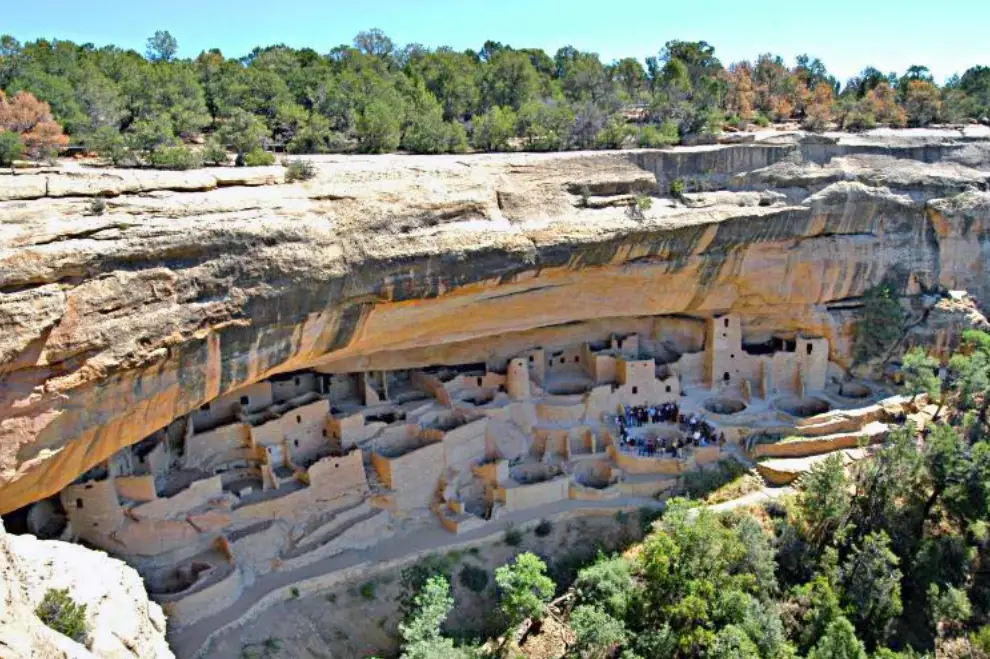
Photo: Wikimedia Commons
The Mystery of the Great Migration
Around 1300 AD, something forced the Ancestral Puebloans to leave their cliff cities for good. For decades, this mystery puzzled historians and archaeologists alike. Tree-ring studies later revealed a severe, multi-year drought struck the Southwest during the late 1200s. Crops failed. Streams ran dry. Some scholars also point to conflict between growing communities competing for scarce farmland, firewood, and water.
Whatever the exact cause, families packed up and moved south and east, toward more reliable water sources. They did not vanish into thin air, as old legends once claimed. Instead, they resettled along the Rio Grande in New Mexico and near the Little Colorado River in Arizona. There, they built new communities that still stand today, carrying forward farming methods, building skills, and religious traditions passed down through countless generations of careful, patient builders.
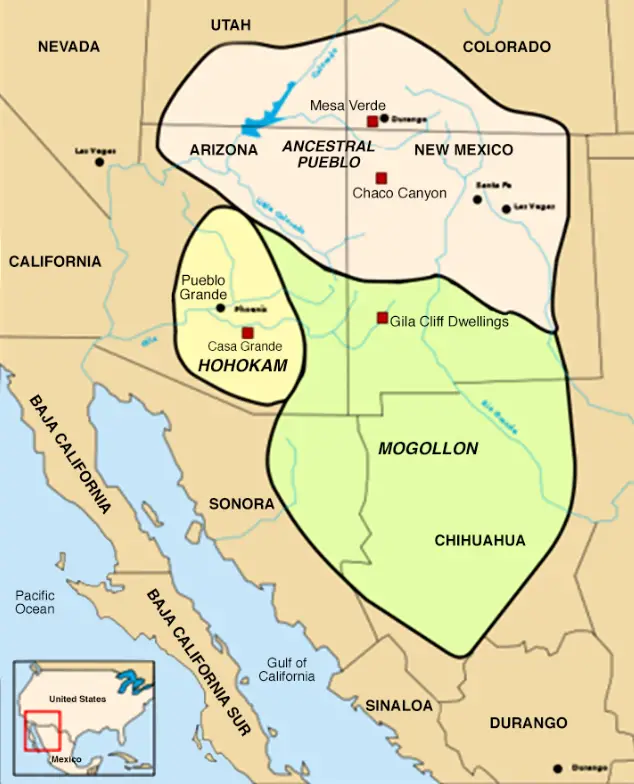
Map: Wikipedia
Why the Name Anasazi Faded Away
The name Anasazi is not actually a Puebloan word at all. It comes from the Navajo language and roughly means “ancestors of the enemy.” Navajo people moved into the Four Corners region centuries after the Puebloans had already built their famous cliff cities and later abandoned them. As farmers and nomadic herders crossed paths, tension grew between the two very different ways of life.
That old friction still shapes relationships today. Many Hopi and Zuni people, direct descendants of the Ancestral Puebloans, prefer not to use the word Anasazi at all. Historians, archaeologists, and museums now favor “Ancestral Puebloans” instead, a name that honors a direct line to living people rather than borrowing a label from a rival culture’s language. Words, it turns out, carry history of their own, long after the events that shaped them.
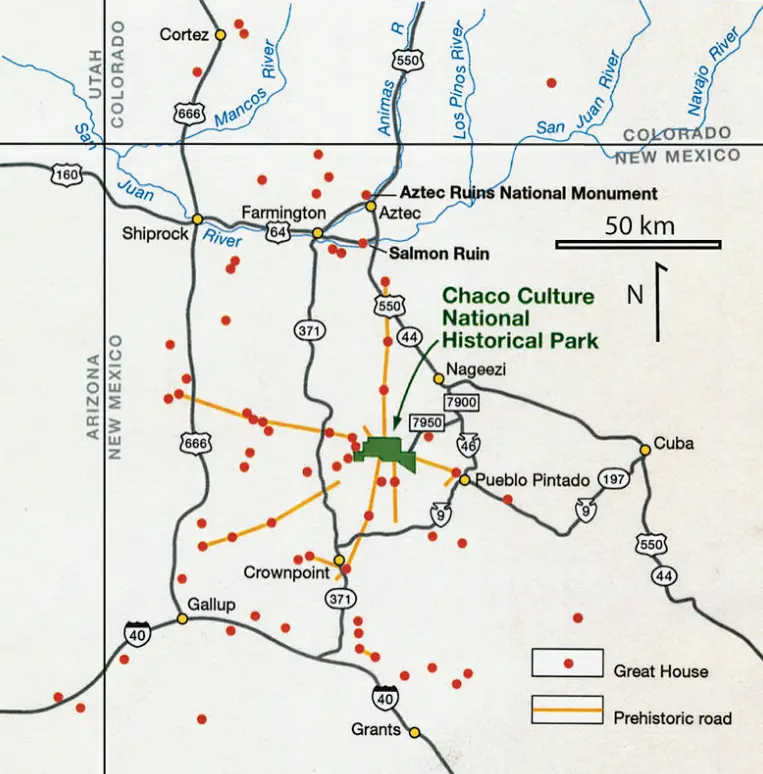
Source: US Geological Survey
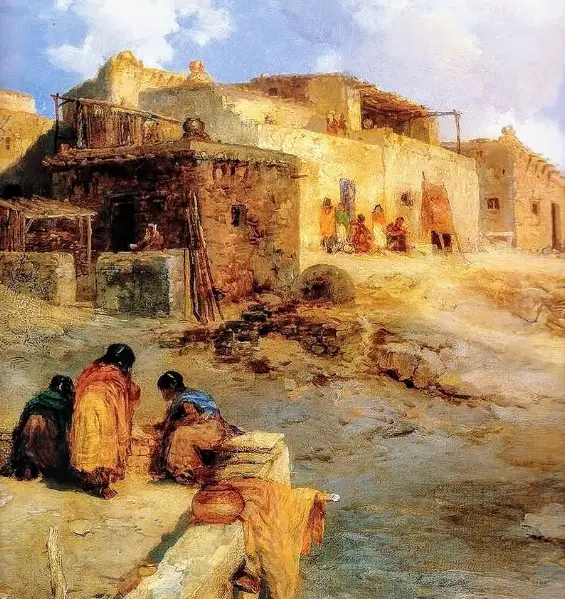
Art: Thomas Moran (1908)
Spanish Contact and the Pueblo Revolt
When Spanish explorers arrived in the 1500s, they found thriving towns built of stacked adobe and stone. They called these villages pueblos, the Spanish word for towns. Soon, the word also came to describe the people themselves. Spanish rule brought new crops, animals, and tools, but it also brought forced labor, harsh punishment, and pressure to abandon traditional religion for those who resisted.
In 1680, Pueblo communities united in a rare and remarkable act. Led by a Tewa man named Popé, they rose up and drove Spanish settlers out of New Mexico for twelve years. It remains one of the most successful Native American revolts in colonial history. Acoma Pueblo, perched atop a 365-foot mesa, has been continuously inhabited since long before that uprising, making it one of the oldest communities in the entire United States today.
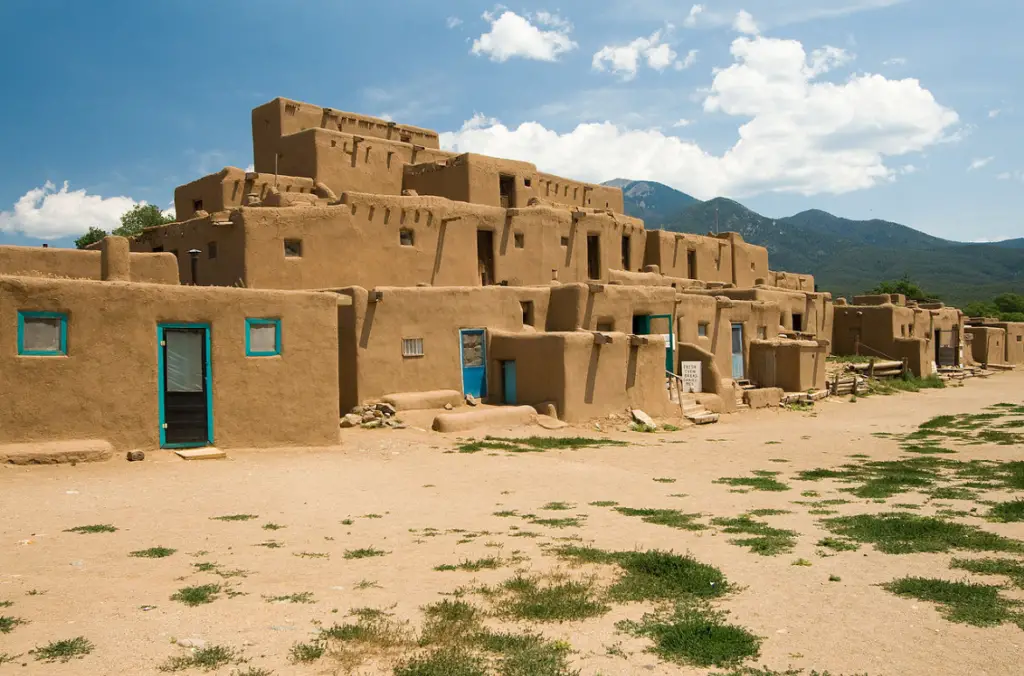
Photo: Wikimedia Commons
Ancestral Puebloans Living Among Us Today
Today, 19 Pueblo communities carry the Ancestral Puebloan legacy forward across the Southwest. In New Mexico, Acoma, Zuni, Taos, and San Ildefonso remain home to thousands of residents. In Arizona, the Hopi villages sit atop high, windswept mesas, surrounded on nearly every side by Navajo lands. Each pueblo governs itself and protects its own language, ceremonies, and farming traditions.
Pottery, weaving, and dances passed down for centuries are still practiced, not performed as museum pieces but lived as daily culture. Many pueblos welcome respectful visitors to feast days and art markets, while keeping sacred ceremonies private and protected from outside cameras. The Hopi, in particular, maintain a rich and complex religious life that deserves its own telling. Their story, like the larger Puebloan story, is very much still being written by each new generation.
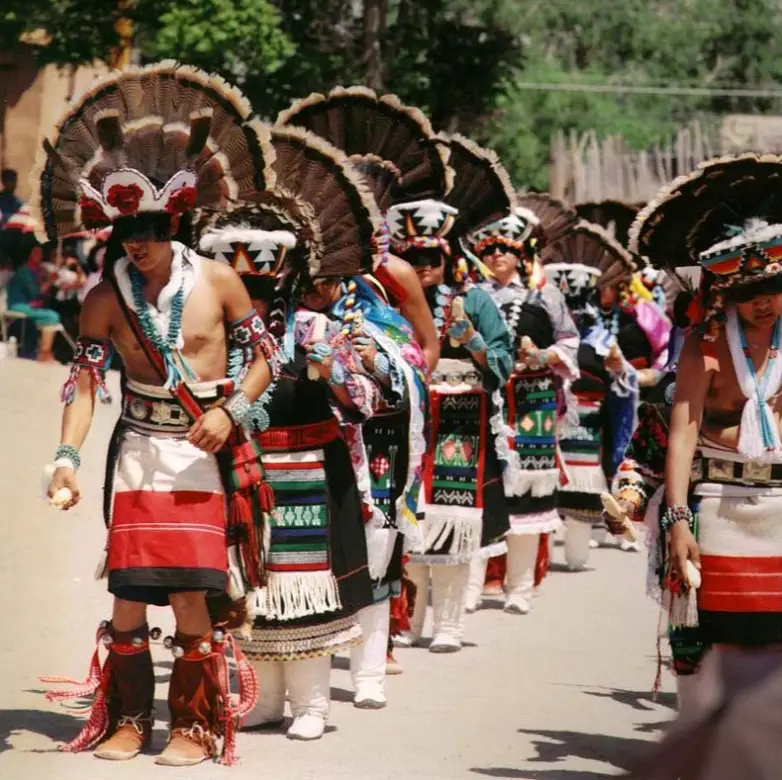
Photo: Wikimedia Commons
Echoes of the Southwest
The story of the Ancestral Puebloans is not a tale of a lost civilization. It is the origin story of living nations. From cliffside villages at Mesa Verde to the mesa-top homes of the Hopi today, one unbroken thread connects ancient builders to their modern descendants. Their resilience through drought, conflict, and colonization mirrors the larger story of the American West itself, a region shaped again and again by people who adapted, endured, and stayed rooted to the land. The next time you see a photo of Cliff Palace or Pueblo Bonito, remember: those walls were never truly abandoned. Their builders’ descendants are still here.
Photo: Wikimedia Commons
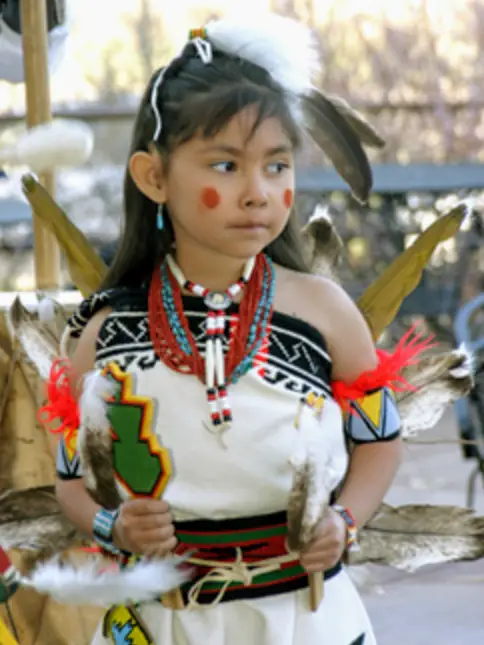
Photo: Wikimedia Commons
** The National Park Service (NPS) offers more information about Ancestral Puebloans and the Chaco Culture here.
** Another article from TheCuriousOnlooker describes who were the first Europeans to reach the American West and the effects that had on history.
Discover more from TheCuriousOnlooker
Subscribe to get the latest posts sent to your email.