Great Salt Lake vs. Prehistoric Lake Bonneville: A Complete Guide
What Is the Connection Between Great Salt Lake and Lake Bonneville?
The Great Salt Lake is a famous place in Utah. It is the largest salt lake in the Western part of the world. But did you know it was once much bigger? Long ago, a giant lake called Lake Bonneville covered most of Utah. It also reached into parts of Idaho and Nevada.
The Great Salt Lake is actually the “leftovers” of that ancient giant. Think of it like a puddle left behind after a big rainstorm. Even though the Great Salt Lake looks huge today, it is much smaller than it used to be. Lake Bonneville was a freshwater lake, but as it dried up, it changed. Today, the Great Salt Lake is very salty, which makes it a very special place to visit.
Table of Contents
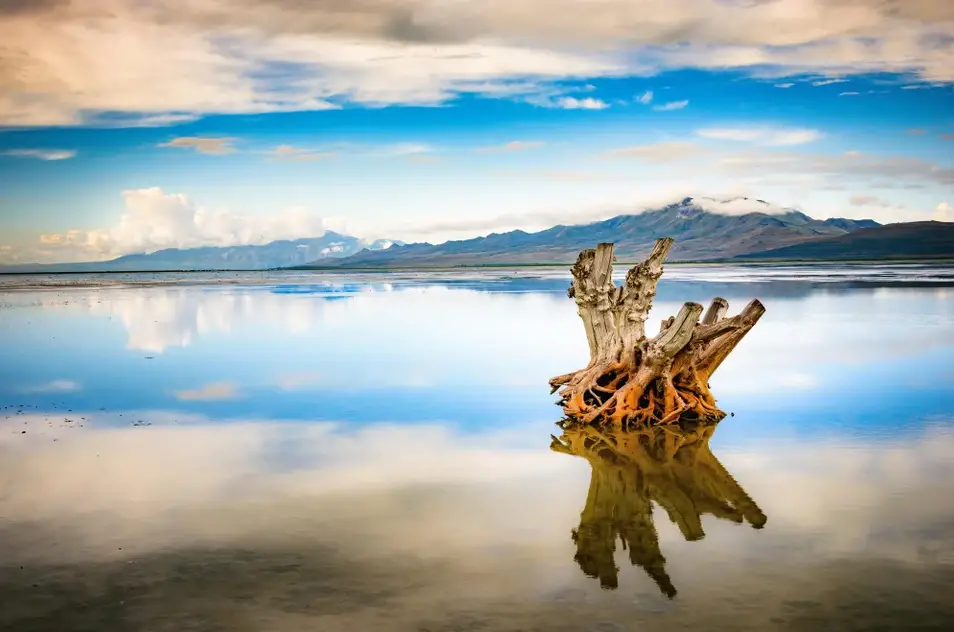
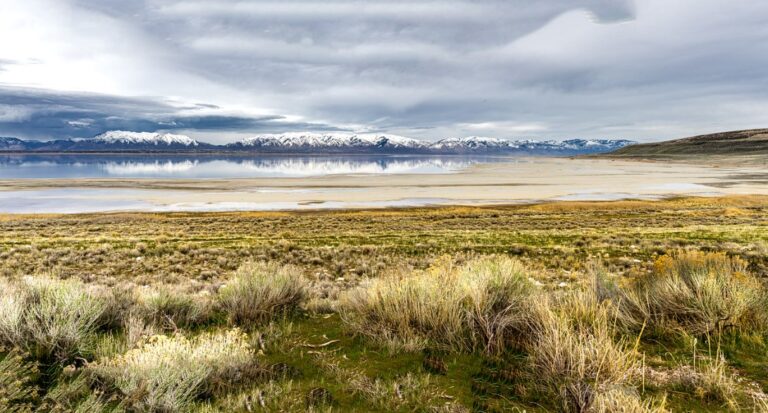
Photo – Zack Frank (Jan 2018)
How Big Was the Ancient Lake Bonneville?
Lake Bonneville was truly massive. At its largest, it was almost as big as Lake Michigan! It covered about 20,000 square miles. To imagine this, think of a lake that is 1,000 feet deep. If you stood in Salt Lake City back then, you would be under hundreds of feet of water.
The lake lasted for thousands of years during the Ice Age. The air was colder and there was more rain and snow. Because the water had nowhere to go, it filled up the big bowl of land known as the Great Basin. You can still see the old shorelines today. If you look at the mountains around Salt Lake City, you will see flat lines high up on the rocks. These lines show where the water used to hit the shore thousands of years ago.
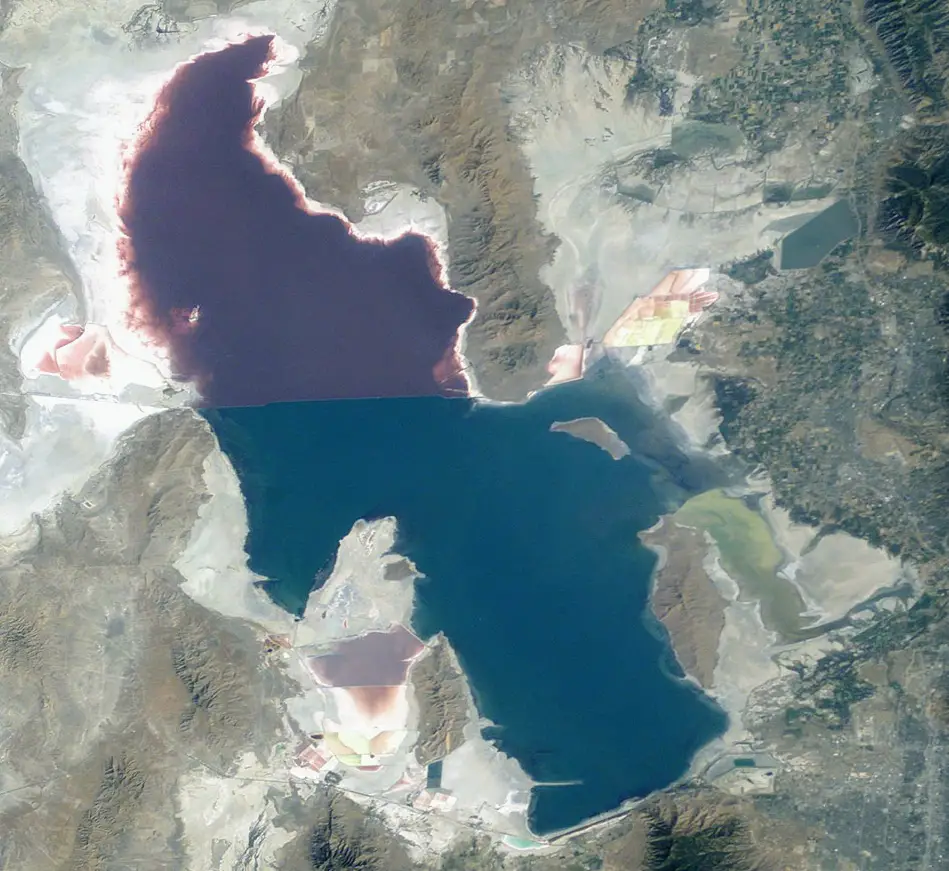
Photo – NASA
Prehistoric Lake Bonneville was vital to the region, influencing the landscape and ecosystems.
Why Is the Great Salt Lake So Salty Today?
Understanding Prehistoric Lake Bonneville gives insight into the geological history of the Great Basin. You might wonder why the water is salty now if the old lake was fresh. The Great Salt Lake is a “terminal lake.” This means that water flows into the lake from rivers, but no rivers flow out. When water sits in the sun, it evaporates. This means the water turns into vapor and goes into the sky.
Exploring the remnants of Prehistoric Lake Bonneville helps us understand how ancient climates shaped our current geography. The impact of Prehistoric Lake Bonneville on the area’s wildlife can still be seen today. Many geological formations were created during the time of Prehistoric Lake Bonneville. Prehistoric Lake Bonneville serves as a reminder of the region’s dynamic geological past.
Lessons from Prehistoric Lake Bonneville can inform current water management practices in the region. However, salt and minerals do not evaporate. They stay behind in the lake. Over thousands of years, more and more salt has collected in the water. Today, the water is much saltier than the ocean. It is so salty that people can easily float on top of it without even trying! In the 1840s, settlers were amazed by this. They found they could lie back and bob like a cork.

Prehistoric Lake Bonneville and the Present Day Great Salt Lake
Image – Wikipedia.org
How Does the Lake Change Over Time?
The Great Salt Lake is very shallow. Because it is not deep, its size changes a lot. When there is a lot of rain, the lake grows. When there is a drought, the lake shrinks. In 1963, the lake was at its smallest. It covered only 950 square miles. But just a few years later, in 1986, it grew to 3,300 square miles!
The study of Prehistoric Lake Bonneville has implications for understanding climate change. Many visitors are intrigued by the history of Prehistoric Lake Bonneville when they come to the Great Salt Lake. Ecologists study the effects of Prehistoric Lake Bonneville on modern wildlife populations.
When the lake shrinks, it leaves behind white salt flats. These flats look like snow, but they are actually hard salt. Because the lake changes so much, people have to be careful when they build things near the shore. The lake is a reminder that nature is always changing. It reacts to the weather and the sun every single year.
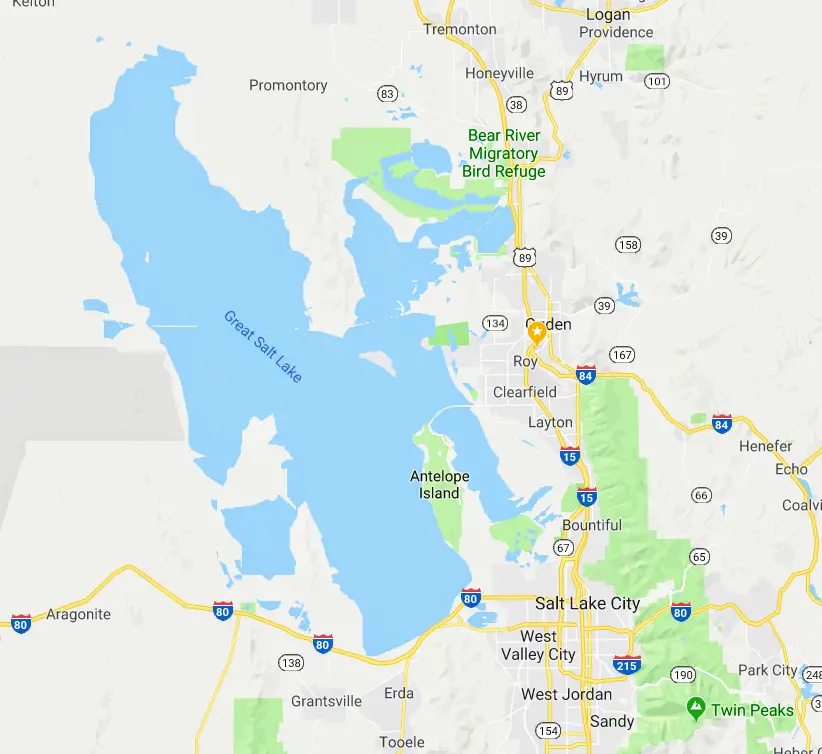
Source – Google Maps
Overall, Prehistoric Lake Bonneville remains a captivating subject for both scientists and history enthusiasts. The legacy of Prehistoric Lake Bonneville is evident in the unique ecosystems found in the region today.
Fun Things to See and Do at the Great Salt Lake
Visitors often seek to learn more about the geological significance of Prehistoric Lake Bonneville during their trips. Even though the water is salty, there is a lot to do. Many people visit Antelope Island. You can drive across a long road to get there. On the island, you can see real buffalo (bison) and many types of birds. Since the lake is part of a major path for birds flying south, it is a great place for bird watching. (This TCO article about Antelope Island goes into more details about what to see and do.)
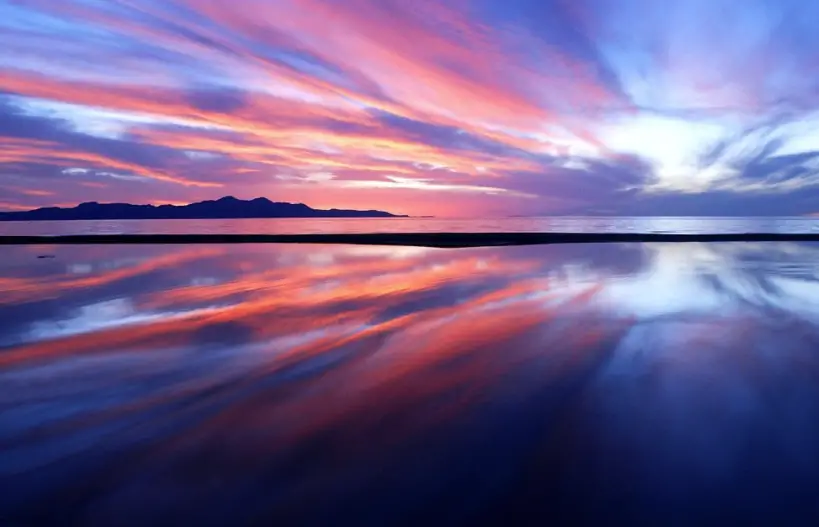
Prehistoric Lake Bonneville’s influence on local culture is a fascinating topic for many researchers. You can also go sailing. Even though the lake is shallow, people love to take boats out to watch the sunset. The salt in the air makes the sunsets look very bright and colorful. Some people even take dinner cruises. If you visit, make sure to look for the “brine shrimp.” These are tiny creatures that live in the salt water. They are a very important food for the millions of birds that visit Utah every year. The Great Salt Lake is a beautiful remnant of our prehistoric past.
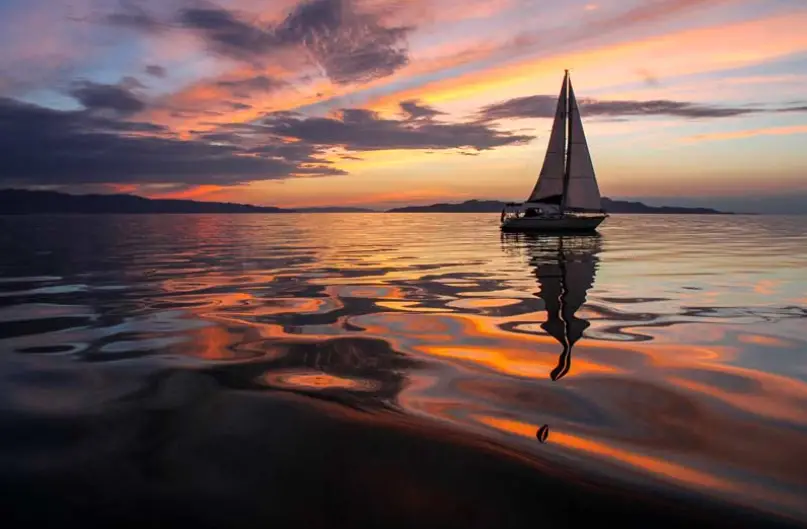
Photo – Rick Egan (Jun 2013)
Discover more from TheCuriousOnlooker
Subscribe to get the latest posts sent to your email.