The Very Large Array: Why Do They Call It New Mexico’s Giant Ear to the Universe?
The Very Large Array, known as the VLA, is one of the most powerful radio telescopes on Earth. It sits on a remote, high desert plain in New Mexico and listens to the sky in ways human ears never could. Twenty-seven enormous dish antennas work together as one giant listening device. They have helped scientists study black holes, distant galaxies, and the birth of stars. The VLA has also appeared in Hollywood films, making it one of the most recognized scientific sites in the American West.
Key Takeaways
- The Very Large Array is made up of 27 dish antennas that work as a single, giant radio telescope.
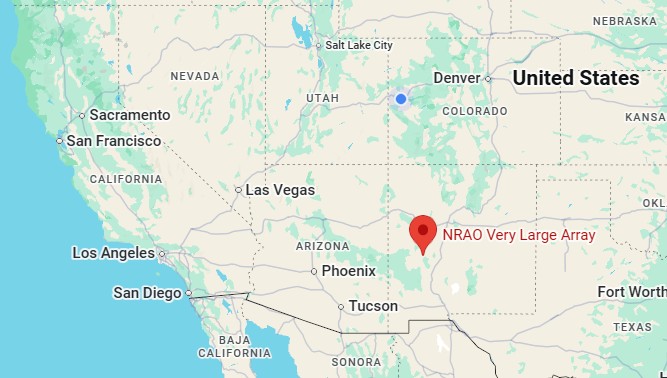
- It sits on the Plains of San Agustín in New Mexico, about 50 miles west of Socorro.
- The VLA does not collect light. It collects radio waves sent out naturally by objects in space.
- The VLA appeared in the 1997 film Contact, starring Jodie Foster, bringing it global recognition.
- Karl G. Jansky, a physicist from Bell Labs, pioneered radio astronomy in the early 1930s, making the VLA possible.
Map – Google
A New Way of Seeing the Sky
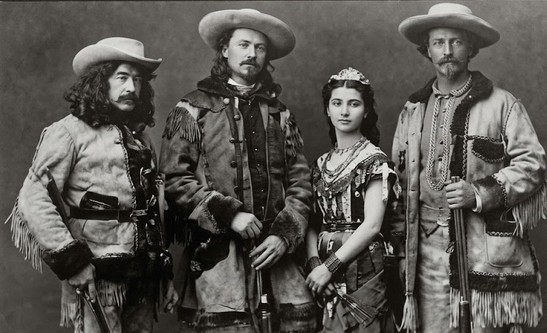
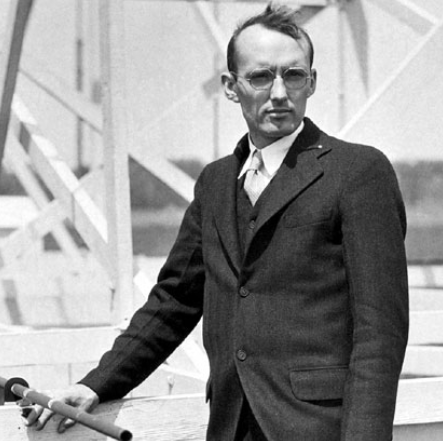
Karl G. Jansky was the first person to detect radio waves coming from outer space. In 1932, while working for Bell Telephone Laboratories in New Jersey, Jansky discovered that a steady hiss in his radio receiver was coming from the center of the Milky Way. He had not set out to study space. He was trying to track down interference on radio telephone lines. That accidental discovery changed science forever. It opened a new branch of astronomy…one that did not depend on visible light at all.
Before Jansky’s discovery, astronomers could only study what their eyes or optical telescopes could see. But the universe sends out far more than light. It pulses with radio waves, invisible to human eyes but full of information. Building a telescope to capture those waves was the logical next step. It would take several more decades and an enormous engineering effort to make it happen.
Pioneer of Radio Telescopes
Building the Very Large Array Radio Telescope
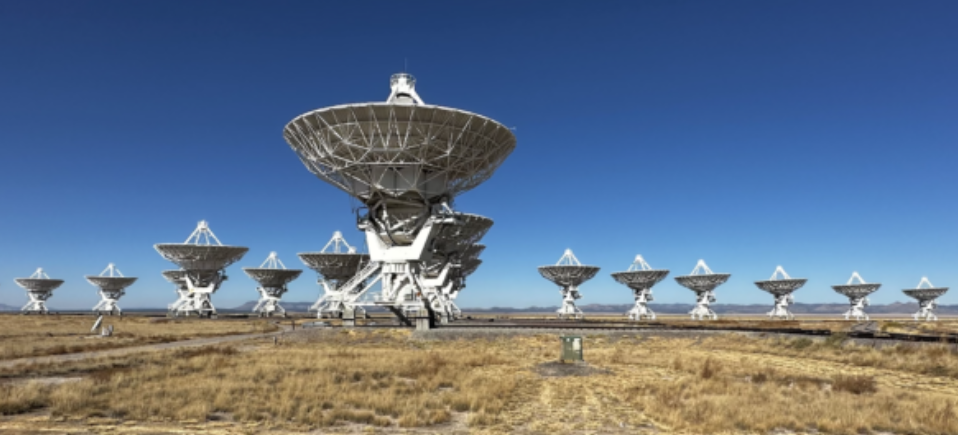
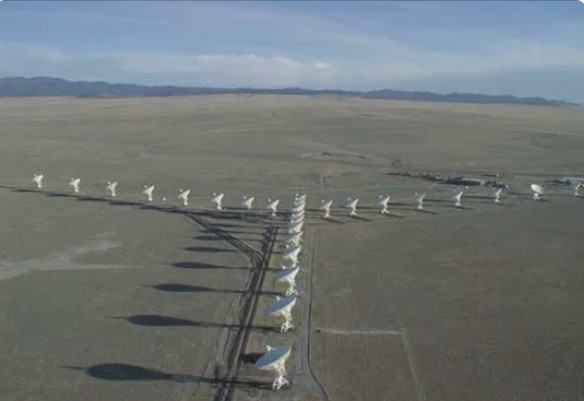
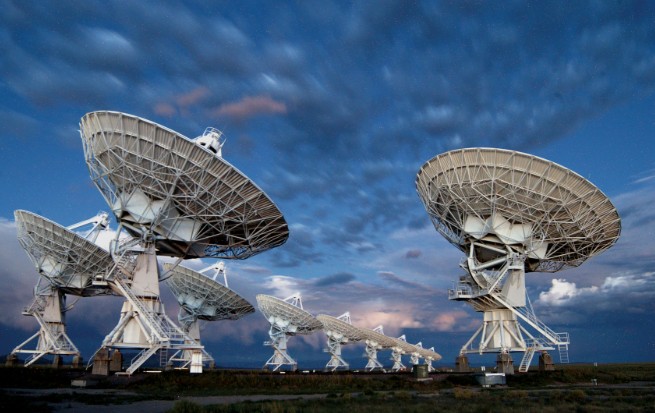
The Very Large Array (VLA) was built by the National Radio Astronomy Observatory, with construction running from 1973 to 1980. The project required solving problems that had never been faced before. Each of the 27 dish antennas stands 82 feet tall and weighs 230 tons. Together, they stretch across the New Mexico desert in a Y-shaped pattern. Each arm of the Y extends up to 23 miles from the center.
The dishes are not fixed in place. They move on rails and can be repositioned into four different configurations. Spreading them farther apart gives scientists finer detail. Pulling them closer together gives a wider view. A special computer system combines the signals from all 27 dishes into one image. This technique is called interferometry. It gives the VLA the resolving power of a single dish 22 miles across…something no single structure could ever achieve.
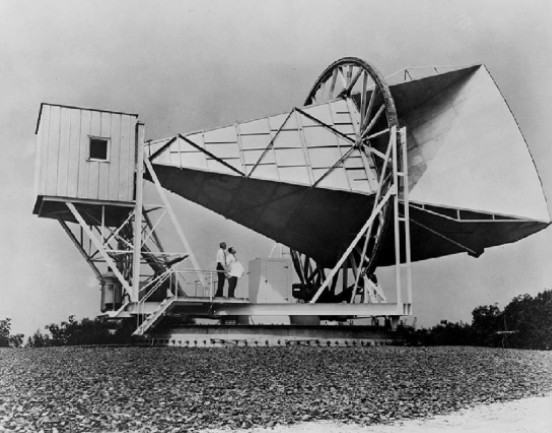
Photo: NASA
The Plains of San Agustín: A Place for Silence
The Very Large Array sits on the Plains of San Agustín, a broad, flat basin at an elevation of about 6,970 feet above sea level. The site was chosen carefully. The high altitude reduces water vapor in the air, which can interfere with radio signals. The surrounding mountains block radio noise from cities. The plain itself is wide enough to allow the antenna arms to spread to their full length.
The Plains of San Agustín are ancient. Geologists believe the basin was once filled by a large lake during the last Ice Age. Today it is dry and quiet…a vast open space with few roads and fewer people. That isolation is exactly what radio astronomers need. Even a passing car radio can create interference! The emptiness of this corner of New Mexico is not a drawback. It is the whole point.
Starring in Science and on the Silver Screen
The Very Large Array became world-famous in 1997. That is when it appeared in the film Contact, directed by Robert Zemeckis and starring Jodie Foster. In the film, Foster’s character listens at the VLA for signs of intelligent life beyond Earth. The scenes were filmed on location. Millions of viewers saw the white dishes lined up across the desert and wondered what they were. Many later made the trip to New Mexico to see them in person.
The VLA is a working facility, but it welcomes visitors. A self-guided walking tour lets guests walk up to one of the massive dishes. The site has a small visitor center and a clear view of the full antenna array. Few scientific facilities in the world are as accessible as this. Standing near one of those dishes, looking up at 230 tons of steel pointed at the sky, is the kind of moment that is hard to forget.
Still Listening and Still Finding
The Very Large Array continues to be one of the most productive scientific instruments ever built. It has contributed to thousands of research papers and helped map features of the universe that were once completely unknown. Its location in the American Intermountain West — far from city lights and human noise — was no accident. The wide, empty landscapes of the region have always attracted those searching for something beyond the ordinary. In New Mexico’s high desert, 27 giant dishes do exactly that, every day, in silence.
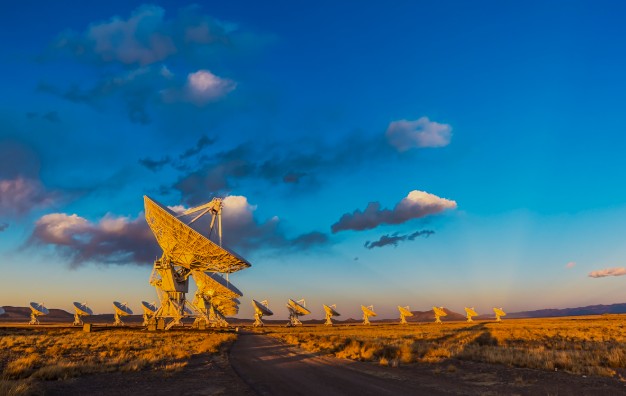
Photo from The Amazing Sky, Alan Dyer
- If you’re curious, here are more articles about interesting people, places and things in New Mexico.
Discover more from TheCuriousOnlooker
Subscribe to get the latest posts sent to your email.