What Is Pando? The Stunning Secret of Utah’s One-Tree Forest
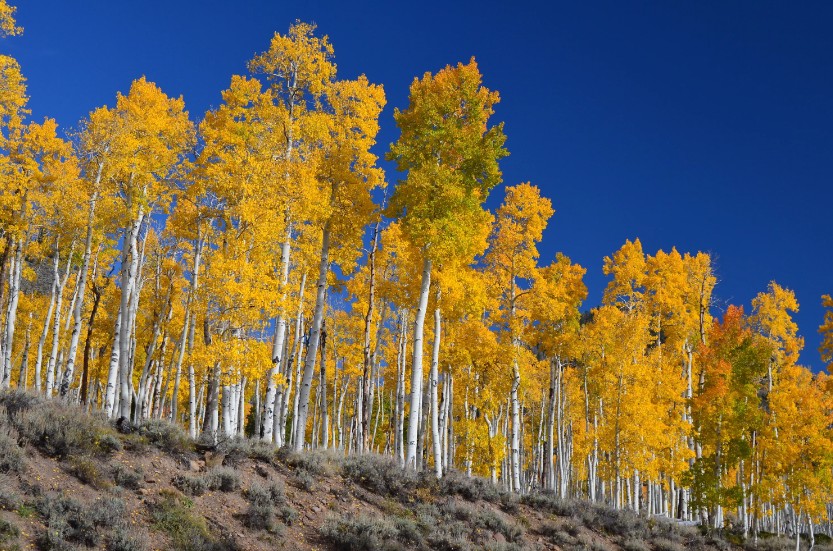
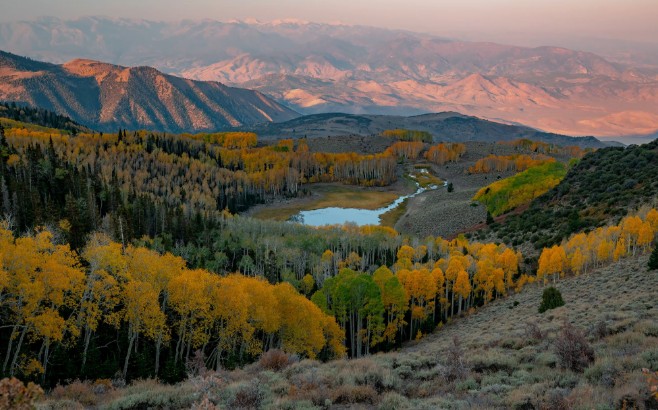
Pando (Utah) looks like a forest. It breathes like a forest. In autumn, it blazes with gold like thousands of trees turning color all at once. But Pando is not a forest at all. It is a single tree — one enormous, ancient organism spreading across 106 acres in central Utah’s Fishlake National Forest. It weighs an estimated 13 million pounds, making it the heaviest living thing on Earth. And scientists believe it has been alive for up to 80,000 years. That is a living thing older than civilization itself.
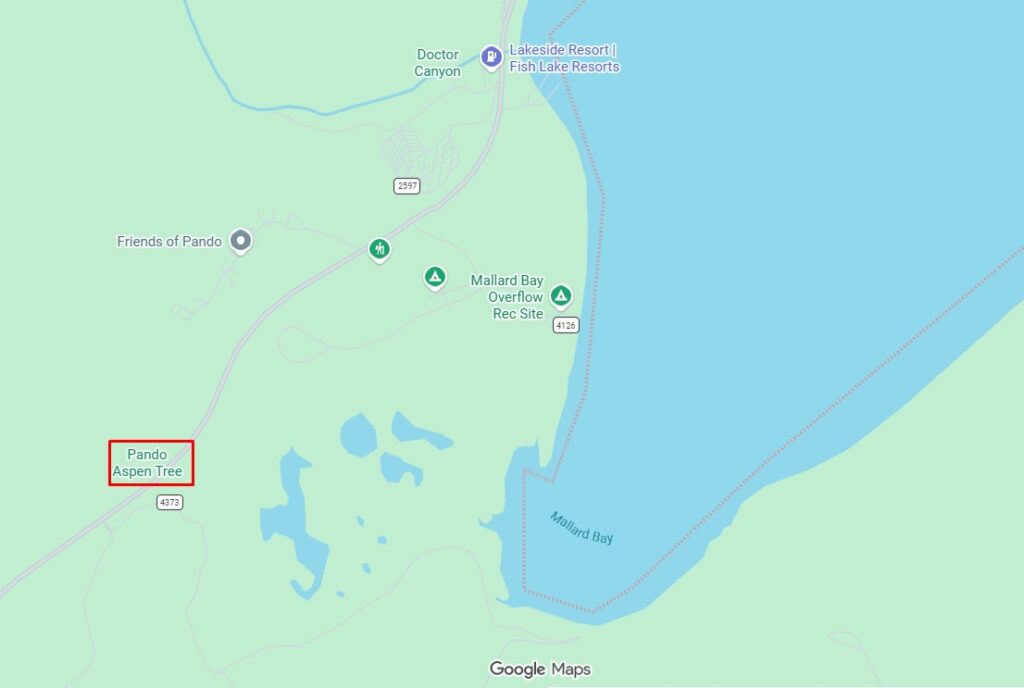
Map – Google Maps
Table of Contents
One Root, 47,000 Trunks: What Exactly Is Pando?
Pando is a “clonal colony” of quaking aspen. Every one of its roughly 47,000 trunks is genetically identical. They all grow from a single, massive underground root system. Each trunk looks like a separate tree, but none of them is. They are all part of the same individual organism.
Quaking aspens reproduce in two ways. They can grow from seeds like most trees. But they also spread by sending up new shoots — called suckers — from their root system. This underground method is how Pando has grown so vast. Over tens of thousands of years, new trunks kept rising from the same ancient roots, spreading outward across the basin near Fish Lake.
The name Pando comes from the Latin phrase meaning “I spread.” It was given by scientist Michael Grant in 1992, when he and colleagues at the University of Colorado formally described the clone as a single living organism. The nickname that stuck, though, is simpler and more evocative: the Trembling Giant.
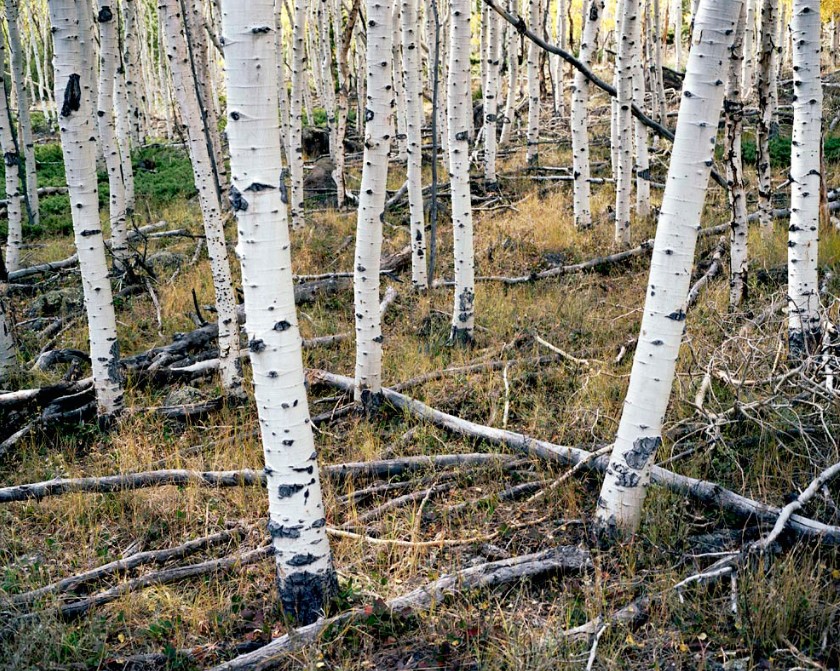
Image – Rachel Sussman/Flickr
The Pando Discovery: Scientists Who Found the Hidden Giant
For most of human history, no one knew Pando existed. People walked through it, camped near it, hunted in it. But to the naked eye, it was just a forest. It took careful science and a sharp pair of eyes looking at aerial photographs…to see what was really there.
In the late 1960s, botanist Burton V. Barnes of the University of Michigan began studying aspen clones in the American West. He noticed that a stand of aspens near Fish Lake in Utah was unusually large and appeared to behave as a single unit. Barnes and his colleague Jerry Kemperman published their findings in 1976, identifying the stand as one individual organism. At the time, DNA testing did not exist. Barnes relied entirely on the physical characteristics of the trees — bark color, leaf shape, branching patterns.
Decades later, a team led by molecular ecologist Karen Mock at Utah State University confirmed Barnes’s finding through genetic analysis. Her team ground aspen leaves into powder and extracted DNA from the samples. Every trunk tested came back with the same genetic signature. “I was expecting that it wouldn’t be one single clone.” Mock admitted afterward: “I was wrong.”
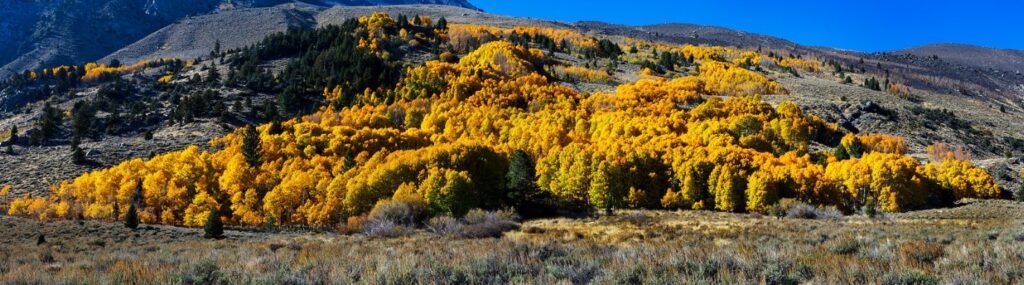
Image – Dennis White/Flickr
Pando’s Deep Past: An Ancient Organism in the American West
Scientists estimate that Pando’s root system is between 60,000 and 80,000 years old. If that is correct, Pando was already ancient when woolly mammoths still roamed the land nearby. It survived the last Ice Age. It watched glaciers retreat. It kept growing while human civilizations rose and fell on the other side of the world.
Soil studies at the site show that fire has visited the Pando basin repeatedly over at least 9,000 years. Pando responded to each fire the same way aspens always do — by sending a flush of new suckers up from its roots, replacing burned trunks with fresh ones. Fire was not an enemy. For much of Pando’s history, it was a renewal.
Archaeologists also know that people lived in and around Pando’s homeland for thousands of years. The Fremont culture used the Fish Lake area as a base. They hunted and lived off the land among the aspens. Evidence suggests they left the region around 1400 CE. It was a time that overlapped with a severe drought. Later, it would become the beginning of the Little Ice Age. Pando outlasted them, as it has outlasted nearly everything else.
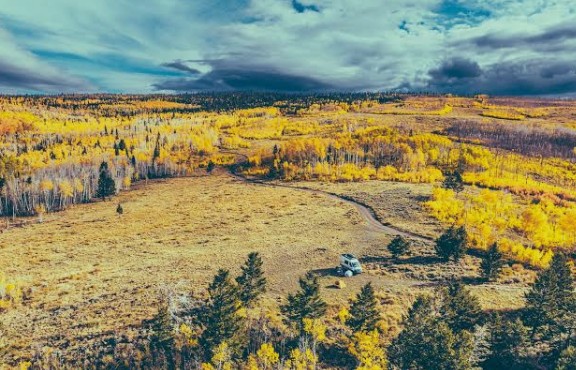
Image – Tim Kemple
A Living Ecosystem: What Calls Pando Home
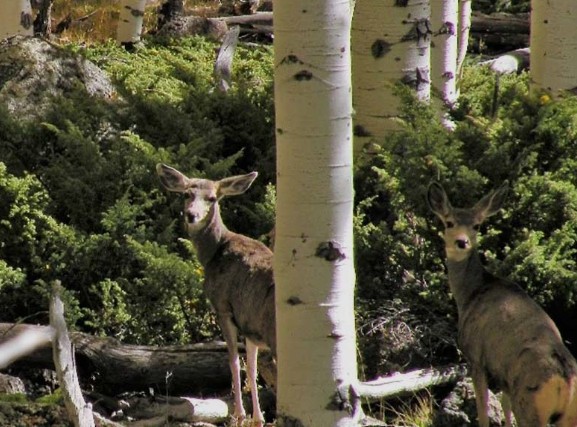
Pando is more than a single organism. It is a thriving ecosystem. The dense aspen canopy creates a cool, shaded layer below where grasses, mosses, and wildflowers take hold. Birds nest in the high branches. Mule deer, elk, and black bear move through the stand in all seasons.
Aspen forests like Pando are what ecologists call keystone ecosystems. They support a far greater variety of wildlife than the surrounding landscape. In Utah’s high-elevation basin, where juniper and sagebrush dominate the drier slopes, Pando’s 106 acres stand out as a hub of biological richness. In 2006, the U.S. Postal Service recognized Pando’s significance by featuring it on a stamp as one of the “40 Wonders of America.”
Visitors can walk into Pando today along the shores of Fish Lake on Utah State Highway 25. Fencing marks some protected sections. The Doctor Creek Recreation Site, a U.S. Forest Service campground, sits inside the organism itself. You can spend the night inside a living thing that is older than the Egyptian pyramids!
The Pando Crisis: Is the World’s Largest Organism Dying?
Pando is in serious trouble. For decades, something has been going wrong. Old trunks age out and fall. New shoots push up from the roots — but deer and cattle eat them before they can grow tall enough to survive. Without young trees replacing old ones, Pando is slowly losing ground. Scientists describe it as a forest of elderly trees with no next generation coming up behind them.
The problem traces back to human decisions. Predators like wolves and cougars were removed from the region over the course of the twentieth century. Deer populations grew unchecked. Fire suppression, livestock grazing, and the expansion of recreation all added pressure. The ecosystem that had sustained Pando for thousands of years fell out of balance.
Researchers from Utah State University and the Western Aspen Alliance have worked to turn things around. Fencing has been erected around portions of Pando to keep grazing animals out. Where fencing has held, young shoots are returning and growing. But where fences have gaps — or where deer have jumped an eight-foot barrier — the recovery stalls. As ecologist Paul Rogers put it: “Pando has likely existed for thousands of years. It is now collapsing on our watch.”
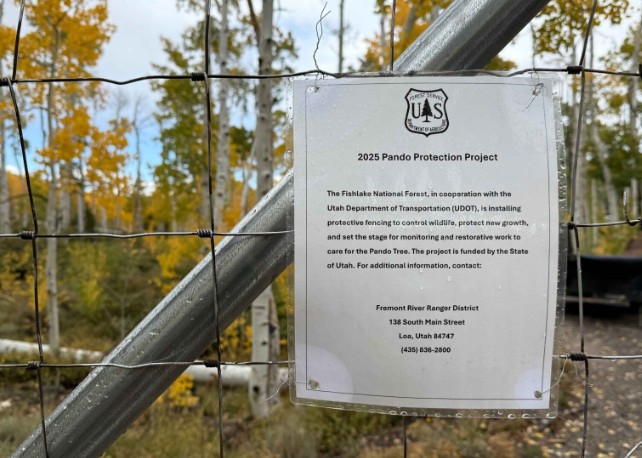
Image – Amiee Maxwell
A Living Lesson from the West
Pando is one of the great natural wonders of the American West. It is also one of the West’s most urgent stories. A living thing that survived Ice Ages, droughts, and the rise and fall of entire cultures is now threatened — not by a force of nature, but by the slow drift of human choices.
The American West is full of ancient things. But few of them are as alive, as quietly present, or as vulnerable as the Trembling Giant. Pando does not ask for anything dramatic. It just needs what it has always needed: room to grow, and time. Whether we can give it that is the question that will define its next chapter — and perhaps something important about our own.
- If you’re curious about Pando’s current condition and what it’s future could be, the Utah State Historical Society offers more details here.
- An equally interesting place a few hours north of Pando, is in the middle of the Great Salt Lake. More details can be found here.
Discover more from TheCuriousOnlooker
Subscribe to get the latest posts sent to your email.