What Secrets Hide Inside Carlsbad Caverns National Park?
Deep under the desert sand of southeastern New Mexico, a giant room waits in the dark. Carlsbad Caverns National Park hides hundreds of caves below the Guadalupe Mountains, including one cave with rooms big enough to fit football fields inside. Long before flashlights and elevators, people climbed down on ropes to see what was there, discovering strange rock shapes hanging from ceilings like frozen rain. This is the story of a hidden world and the curious people who dared to explore it.
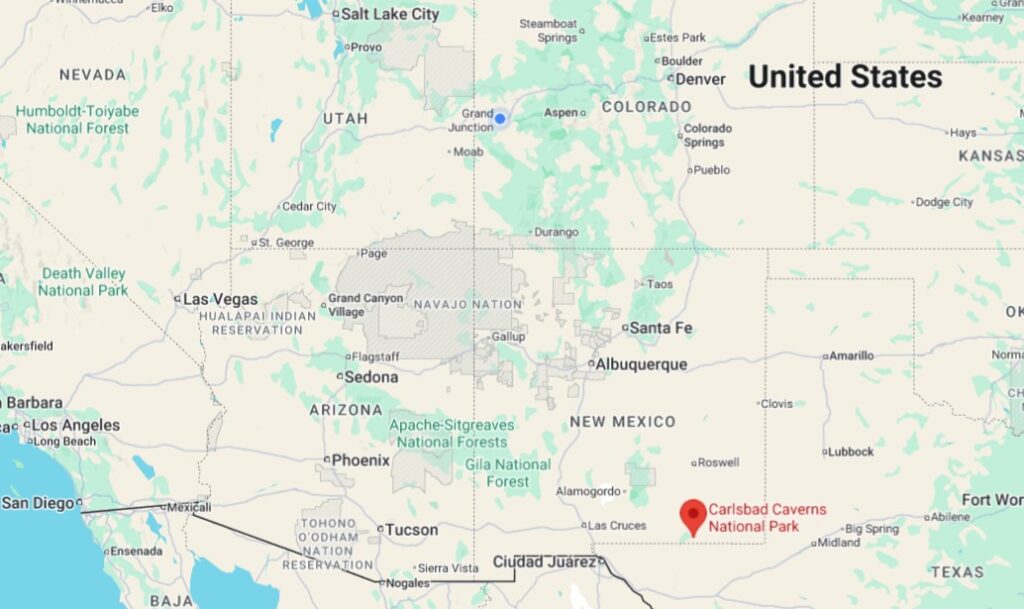
Map: Google
Table of Contents
How an Ancient Sea Shaped Carlsbad Caverns
Carlsbad Caverns sits inside the Guadalupe Mountains in the dry Chihuahuan Desert, but about 250 million years ago, a warm sea covered this land. Tiny sea creatures like sponges, coral, and snails built a huge reef, which was eventually buried deep underground by sand and salt after the sea dried up. Millions of years later, the ground lifted to form mountains, and while rain and wind wore away the top rock, gas from deep underground oil mixed with water to create a strong acid that slowly ate away at the limestone, carving out room after room.
Unlike most caves that are shaped by rainwater seeping through cracks from above, Carlsbad Caverns grew from acid rising up from below. This rare process explains why its rooms are so big, and why so many caves cluster together in one small stretch of desert.
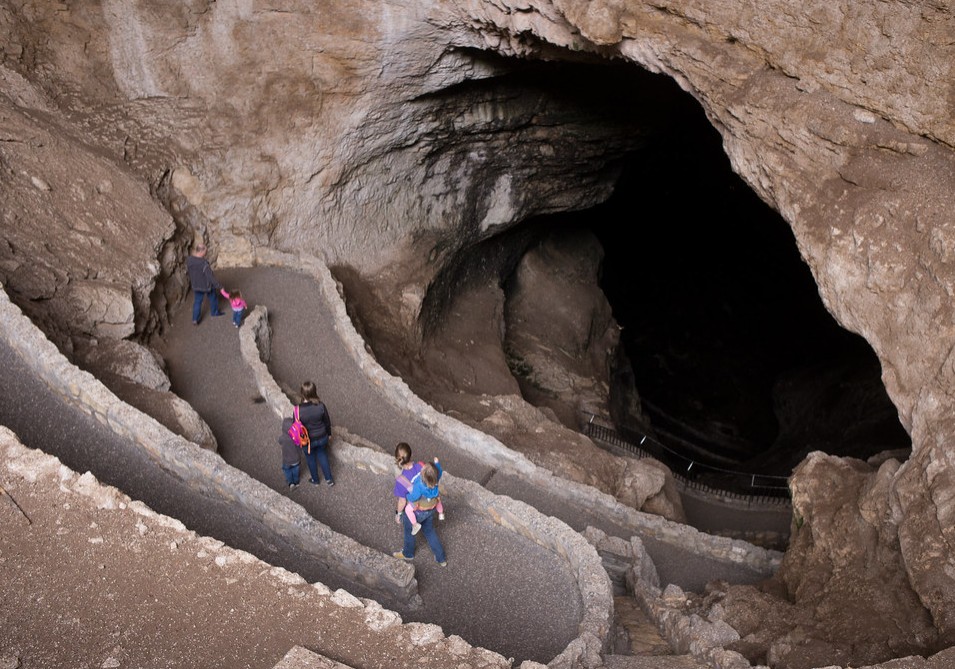
Photo: Paul Sadowski
Native Peoples Knew of the Cave for Centuries
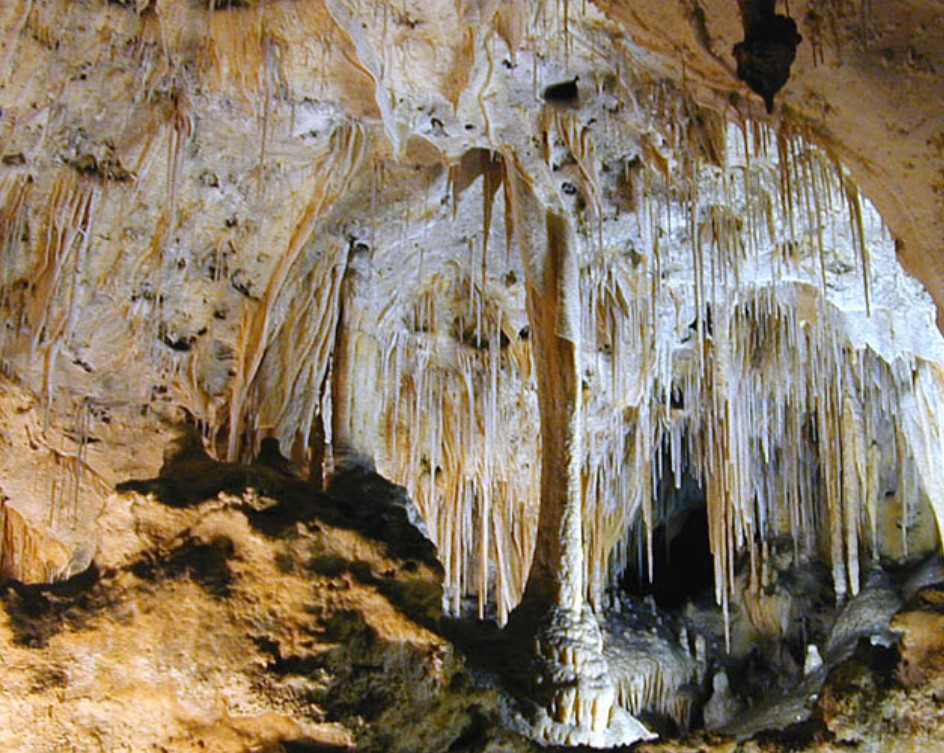
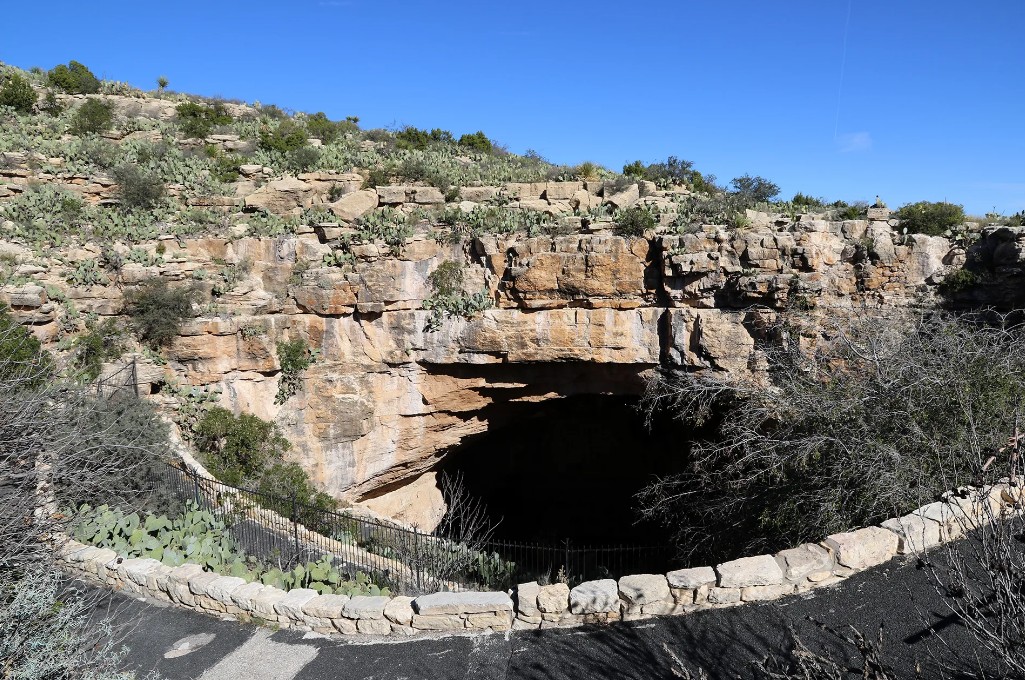
In the late 1800s, a young cowboy named Jim White saw what looked like a dark cloud of smoke rising from the ground near the Guadalupe Mountains, which turned out to be thousands of bats flying out of a hole in the earth. Wanting to see where they went, White built a rough ladder out of wire and sticks and climbed down into the dark with only a kerosene lamp. What he found amazed him: huge rooms stretched out before him, filled with strange stone shapes resembling icicles, curtains, and giant teeth.
For years, almost no one believed his stories, and few wanted to climb down a wobbly ladder into the unknown. White kept exploring anyway, learning new passages by lamplight and eventually guiding scientists and photographers whose photographs finally proved his stories true. Jim White ultimately became the cave’s first ranger, sharing the underground world he had once explored alone.
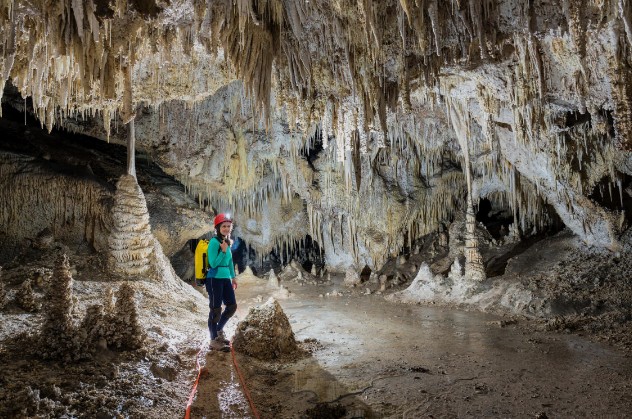
Photo: Chris Howe
Jim White and the Discovery in the Dark
In the late 1800s, a young cowboy named Jim White saw what looked like a dark cloud of smoke rising from the ground near the Guadalupe Mountains, which turned out to be thousands of bats flying out of a hole in the earth. Wanting to see where they went, White built a rough ladder out of wire and sticks and climbed down into the dark with only a kerosene lamp. What he found amazed him: huge rooms stretched out before him, filled with strange stone shapes resembling icicles, curtains, and giant teeth.
For years, almost no one believed his stories, and few wanted to climb down a wobbly ladder into the unknown. White kept exploring anyway, learning new passages by lamplight and eventually guiding scientists and photographers whose photographs finally proved his stories true. Jim White ultimately became the cave’s first ranger, sharing the underground world he had once explored alone.
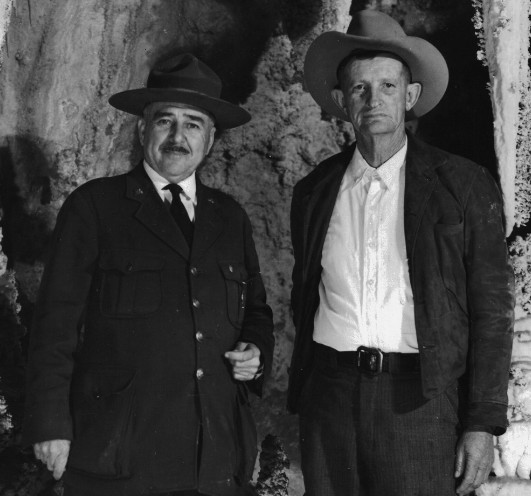
Photo: National Park Service
Bats, Guano, and Big Business Underground
Long before tourists arrived, the cave’s hundreds of thousands of summering bats brought a different kind of visitor due to their droppings, called guano, which piled up on the floor. Because guano makes excellent fertilizer for crops, companies set up mining operations inside the cave in the early 1900s. Workers lowered buckets on cables to scoop up and haul the guano to the surface, and some of the very first visitors actually entered the cave by swinging over the dark pit inside these mining buckets.
The guano business did not last forever, slowing down by the 1920s as easier sources of fertilizer appeared elsewhere. However, the buckets and cables had already proven that people would pay to see this strange underground world. Tourism, rather than fertilizer, quickly became the cave’s lasting business.
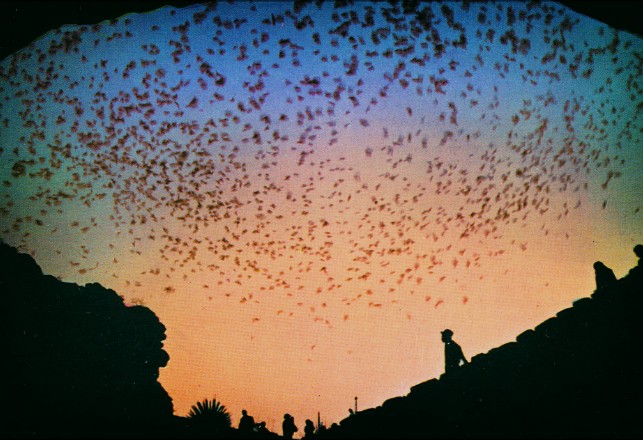
Photo: Thomas Hawk
Carlsbad Caverns Becomes a National Park
Word of the giant cave spread quickly once photographs appeared in newspapers, leading President Calvin Coolidge to sign a proclamation protecting the cave as a national monument in 1923. Scientists soon arrived for an expedition that lasted six months, mapping passages and studying the bats that lived inside. In 1930, Congress strengthened this protection by renaming the site Carlsbad Caverns National Park, and workers later built elevators so visitors no longer had to climb down a steep, tiring path, alongside a visitor center featuring a museum and a cafeteria.
The park kept growing in importance, and in 1995, the United Nations named Carlsbad Caverns a World Heritage Site to honor its great value to the entire world. Today, the park protects more than a hundred caves hidden beneath the desert, including one of the deepest and longest caves in the country.
A Window into the West
Carlsbad Caverns tells a story bigger than one cave, showing how the American West holds secrets both above ground and far below it. Ranchers, scientists, and Native peoples all crossed this same stretch of desert, with each group adding a unique piece to the cave’s long history.
Today, deep within the park, explorers still map a cave called Lechuguilla, which was found to be enormous in 1986 and remains mostly closed to the public for careful study. No one knows exactly how many passages still wait in total darkness, reminding us that even a dry, quiet desert can hide something vast, beautiful, and waiting to be discovered right beneath our feet.
- If you think you might want to visit Carlsbad Caverns, the National Park Service offers good details here.
- TheCuriousOnlooker has other related articles about New Mexico here.
Discover more from TheCuriousOnlooker
Subscribe to get the latest posts sent to your email.